

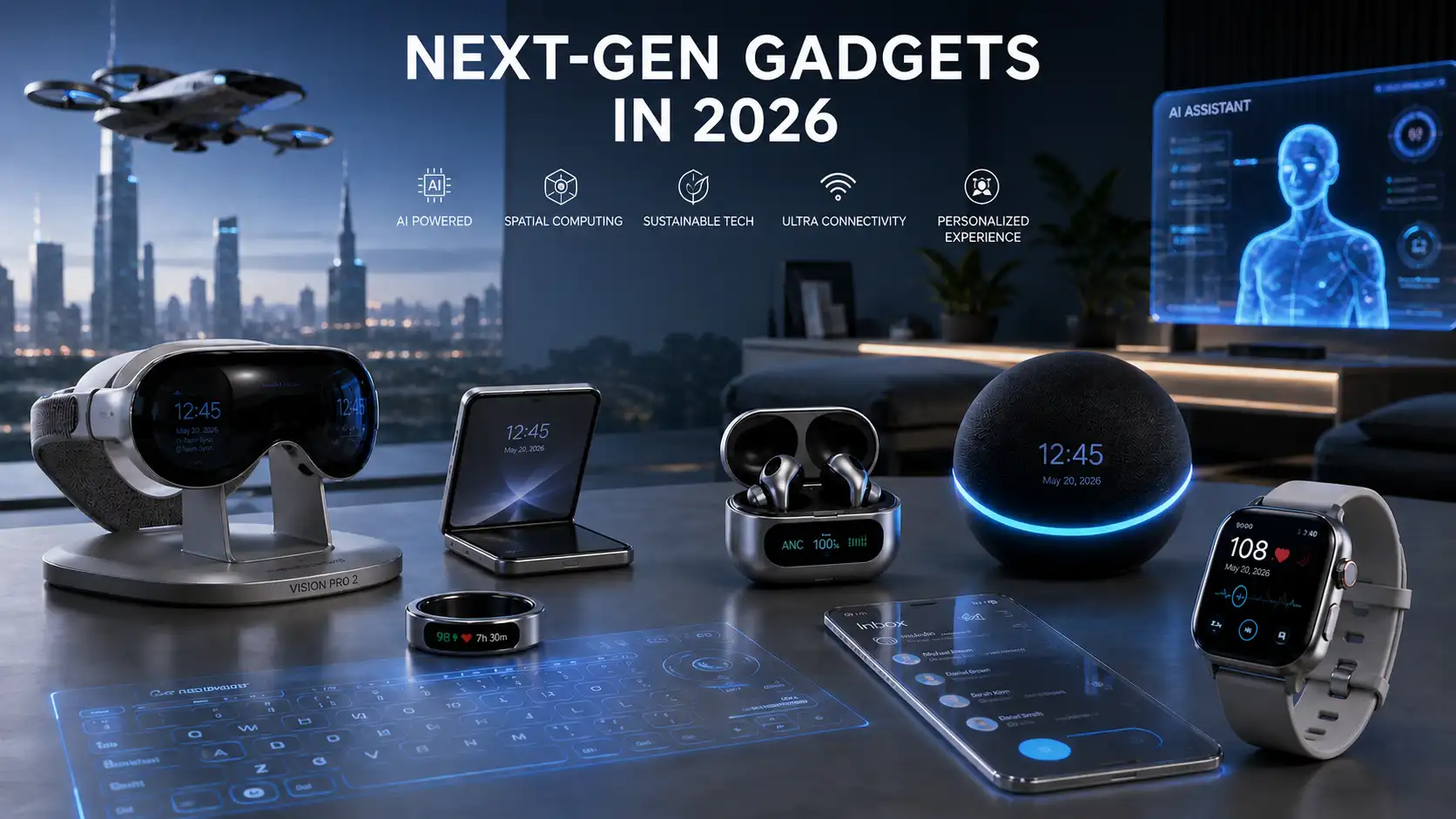
Ever feel like life is moving faster than you can keep up? You’re definitely not alone. In 2026, the pace of life has accelerated in ways that would have felt overwhelming just a decade ago. Work is more flexible but also more demanding, communication is instant, and expectations are higher across the board. But here’s the interesting part—technology isn’t adding to the chaos anymore. Instead, it’s stepping in as the solution.
Next-generation gadgets are no longer just flashy tools designed to impress. They’re becoming deeply integrated into our daily routines, quietly working behind the scenes to reduce stress, eliminate friction, and give us back something incredibly valuable: time. Think about how your day usually goes. From waking up groggy, rushing through tasks, juggling responsibilities, and trying to squeeze in rest—it’s a lot. Now imagine if many of those small, repetitive, and mentally draining tasks were handled automatically.
That’s exactly where these gadgets come in. They’re designed to understand your habits, adapt to your preferences, and support your lifestyle without requiring constant input. It’s not about replacing you—it’s about empowering you. In a way, 2026 feels like the year technology finally learned how to be helpful without being intrusive.
Why Smart Gadgets Are Becoming Essential
Let’s talk honestly for a second—modern life is complicated. Between deadlines, personal responsibilities, health concerns, and the endless stream of notifications, it’s easy to feel like your brain is constantly juggling too many things at once. This is where smart gadgets shift from being optional luxuries to essential tools.
These devices act like an extension of your brain and body. They remember things you might forget, monitor things you can’t see, and handle tasks you simply don’t have time for. Instead of constantly reacting to problems, you’re able to stay one step ahead. That’s a huge mental shift.
Another reason they’ve become essential is how seamlessly they integrate into your life. You don’t need to be a tech expert anymore. Most devices are designed with simplicity in mind—plug them in, connect them, and they start learning. Over time, they become more personalized, more accurate, and more useful.
There’s also an emotional side to this. When you remove small daily frustrations—like searching for misplaced items, forgetting appointments, or dealing with repetitive chores—you create more mental space. And that space allows you to focus on things that actually matter, like relationships, creativity, or simply relaxing without guilt.
Best Next-Gen Gadgets 2026 That Make Life Easier and Smarter
This is where things get exciting. Below, we’ll break down the most impactful next-gen gadgets in 2026 that are actually making a difference in everyday life. These aren’t just futuristic concepts—they’re real tools designed to simplify how you live, work, and relax.
1. AI-Powered Personal Assistants
How They Work
AI-powered personal assistants in 2026 have evolved far beyond simple voice commands. They are now deeply contextual, meaning they don’t just respond—they understand, interpret, and anticipate your needs in a way that feels almost human. These systems analyze patterns in your behavior, from your morning routines and commuting habits to your work preferences and downtime activities, and then use that data to optimize your daily schedule automatically.
For instance, your assistant might notice that you tend to leave home at the same time each day, cross-reference that with real-time traffic conditions, weather forecasts, and your calendar commitments, and then proactively suggest adjustments. It can synchronize across multiple devices, manage emails, filter important messages, organize meetings, set priorities, and even handle repetitive digital tasks without constant input from you.
What makes them incredibly powerful is their continuous learning capability. The more you interact with them, the more refined and personalized their suggestions become. Over time, they evolve into something far beyond a tool—they become a digital partner that understands your lifestyle on a deep level.
Real-Life Benefits
The real transformation happens in your everyday routine. Imagine waking up and not having to think about what comes next because your assistant has already prepared everything—from your schedule and reminders to recommendations based on your energy levels and workload. It might suggest when to take breaks, what tasks to focus on first, or even what meals fit best into your day.
This drastically reduces decision fatigue, which is one of the biggest hidden drains on productivity. By eliminating countless small decisions throughout the day, you preserve mental energy for more meaningful and complex thinking. Over time, this leads to improved efficiency, reduced stress, and a more balanced lifestyle where you feel in control instead of constantly catching up.
2. Smart Health Monitoring Wearables
Beyond Fitness Tracking
Smart health monitoring wearables in 2026 have evolved into comprehensive health ecosystems that go far beyond simple step counting or calorie tracking. These devices continuously collect and analyze a wide range of physiological data, including heart rate variability, blood oxygen saturation, sleep cycles, stress indicators, hydration levels, and even subtle changes in body temperature that could signal early illness.
What sets them apart is their ability to interpret this data in meaningful ways. Instead of just showing numbers, they provide insights that help you understand what’s happening inside your body in real time. Some advanced wearables can even detect irregular heart rhythms, early signs of respiratory issues, or patterns that may indicate chronic conditions developing over time.
Preventive Healthcare
The biggest advantage of these devices lies in preventive healthcare. Rather than waiting for symptoms to appear, you’re constantly receiving feedback that allows you to take action early. Your wearable might notify you when your stress levels are unusually high and recommend breathing exercises, or suggest adjusting your sleep schedule based on recent fatigue patterns.
Over time, this creates a more proactive approach to health. You’re no longer reacting to problems—you’re preventing them. This shift not only improves physical well-being but also builds a stronger awareness of your body, helping you make smarter lifestyle choices that lead to long-term health benefits.
3. Autonomous Home Cleaning Robots
Smarter Than Ever
Autonomous home cleaning robots in 2026 have reached a level of sophistication that makes them feel less like machines and more like fully independent cleaning systems. Equipped with advanced sensors, AI mapping technology, and real-time environmental analysis, these robots can create highly detailed layouts of your home and continuously update them as things change.
They can distinguish between different floor types, identify high-traffic areas, and adjust their cleaning intensity accordingly. Some models are capable of detecting spills, avoiding fragile objects, and even coordinating with other smart home devices to optimize cleaning schedules. Additionally, many robots now feature self-maintenance capabilities, such as automatically emptying dustbins, refilling cleaning solutions, and performing system diagnostics.
Time-Saving Impact
The real benefit becomes clear when you consider how much time and energy cleaning typically consumes. Instead of dedicating hours each week to maintaining your living space, you can rely on these robots to handle it consistently and efficiently. Your home stays clean without requiring constant attention.
This shift has a significant impact on daily life. It reduces physical effort, eliminates one of the most repetitive household chores, and frees up time for more meaningful activities. Whether it’s spending time with family, focusing on work, or simply relaxing, the value of reclaiming those hours cannot be overstated.
4. Augmented Reality Glasses
Daily Use Cases
Augmented reality glasses in 2026 are designed to seamlessly integrate digital information into your real-world environment, eliminating the need to constantly check your phone or switch between devices. These glasses project contextual data directly into your field of vision, allowing you to access information naturally as you move through your day.
For example, while walking in an unfamiliar area, navigation directions can appear as overlays on the road ahead, guiding you turn by turn without distraction. If you encounter a foreign language, the glasses can instantly translate text in real time, making communication and travel significantly easier. Notifications, reminders, and essential updates are displayed in a non-intrusive way, ensuring you stay informed without being overwhelmed.
Work and Entertainment
In professional environments, AR glasses transform how tasks are performed. They enable hands-free access to instructions, real-time collaboration with remote teams, and visualization of complex data in three-dimensional space. This is particularly useful in industries like engineering, healthcare, and design, where precision and clarity are critical.
On the entertainment side, AR creates immersive experiences that blend the digital and physical worlds. Games become interactive environments, movies feel more engaging, and content consumption evolves into something far more dynamic. This combination of functionality and immersion makes AR glasses one of the most versatile gadgets of the modern era.
5. Smart Kitchen Appliances
AI Cooking Assistants
Smart kitchen appliances in 2026 have redefined the cooking experience by integrating artificial intelligence directly into everyday meal preparation. These devices don’t just follow instructions—they actively guide, adjust, and optimize the entire cooking process based on real-time conditions and user preferences.
They can analyze recipes, automatically set the correct temperature and timing, and even adapt cooking techniques depending on the ingredients you’re using. Some systems can recognize food visually, suggest alternative ingredients, and adjust portion sizes based on your dietary needs. This makes cooking more accessible, even for those who have little to no experience in the kitchen.
Reducing Food Waste
Beyond convenience, these appliances play a crucial role in reducing food waste. By tracking inventory inside your fridge and pantry, they can notify you about items nearing expiration and suggest recipes that utilize those ingredients effectively. This helps ensure that food is used efficiently rather than being discarded.
Over time, this not only saves money but also promotes more sustainable consumption habits. It encourages mindful cooking and reduces the environmental impact associated with wasted food, making it a practical and responsible addition to modern households.
If you’re planning your next trip, don’t forget to check out 8 CCC-Certified Power Banks You Should Bring While Traveling for reliable charging solutions on the go.
6. Portable Solar Charging Devices
Sustainability Benefits
Portable solar charging devices in 2026 represent a significant step toward sustainable energy usage in everyday life. These compact yet powerful tools are designed to harness solar energy efficiently, converting sunlight into usable electricity for a wide range of devices, from smartphones and tablets to larger portable electronics.
What makes them particularly valuable is their ability to function independently of traditional power sources. This reduces reliance on grid electricity and provides an eco-friendly alternative that aligns with growing environmental awareness. Many models are now equipped with advanced energy storage systems, allowing them to retain power for use even when sunlight is not immediately available.
Ideal Users
While initially popular among travelers and outdoor enthusiasts, portable solar chargers have become increasingly relevant for everyday users as well. They are especially useful in situations where access to electricity is limited, such as during long commutes, remote work setups, or unexpected power outages.
For individuals who value reliability and sustainability, these devices offer both convenience and peace of mind. Knowing that you have a backup power source powered entirely by renewable energy adds an extra layer of security to your daily routine.
7. Intelligent Home Security Systems
Advanced Surveillance
Intelligent home security systems in 2026 have moved far beyond basic surveillance, incorporating advanced artificial intelligence to provide highly accurate and responsive protection. These systems can analyze visual and behavioral patterns in real time, distinguishing between familiar faces, authorized visitors, and potential intruders with remarkable precision.
They are capable of recognizing unusual activity, sending instant alerts, and even taking automated actions such as locking doors or activating alarms when necessary. Unlike older systems that often triggered false alarms, modern security solutions are designed to filter out irrelevant movements, such as pets or passing vehicles, ensuring that alerts are meaningful and actionable.
Peace of Mind
The most valuable aspect of these systems is the sense of control they provide. Through mobile applications and cloud connectivity, you can monitor your home from anywhere in the world, access live video feeds, review recorded footage, and manage security settings in real time.
This level of accessibility ensures that you’re always connected to your home, regardless of your physical location. Whether you’re at work, traveling, or simply away for the day, the confidence that your living space is protected allows you to focus on other aspects of your life without constant worry.
8. Voice-Controlled Everything
Seamless Integration
Voice-controlled technology in 2026 has become a central component of modern smart environments, enabling users to interact with multiple devices through simple and natural language commands. From lighting and climate control to entertainment systems and household appliances, nearly every aspect of the home can be managed without physical interaction.
This seamless integration is made possible through interconnected ecosystems that allow devices to communicate with one another. A single voice command can trigger multiple actions simultaneously, such as adjusting lighting, setting the temperature, and playing music, creating a highly personalized and efficient living experience.
Accessibility Advantages
Beyond convenience, voice control offers significant accessibility benefits. For individuals with mobility challenges, visual impairments, or other physical limitations, the ability to control their environment through speech provides a level of independence that was previously difficult to achieve.
This technology reduces barriers and ensures that smart living is inclusive, allowing a broader range of users to benefit from advancements in home automation without requiring complex interactions or specialized knowledge.
9. Smart Sleep Technology
Sleep Tracking Evolution
Smart sleep technology in 2026 has advanced into a comprehensive system that monitors and analyzes multiple aspects of your sleep environment and biological patterns. These devices track movement, breathing rates, heart activity, and external factors such as room temperature, noise levels, and lighting conditions.
By combining this data, they provide a detailed understanding of your sleep quality, identifying patterns that may be affecting your rest. Instead of simply telling you how long you slept, they explain how well you slept and why certain disruptions occurred.
Improving Sleep Quality
Based on this analysis, smart sleep systems can automatically adjust your environment to improve rest. This may include regulating room temperature, dimming lights gradually, or introducing calming sounds to help you fall asleep more easily.
Over time, these adjustments lead to more consistent and restorative sleep cycles. Better sleep directly impacts overall health, mood, and productivity, making this technology one of the most impactful additions to modern living.
10. Personal AI Companions
Emotional Intelligence in Tech
Personal AI companions in 2026 represent a significant shift in how humans interact with technology, introducing emotional intelligence into digital systems. These companions are designed to understand tone, context, and behavioral cues, allowing them to respond in ways that feel natural and empathetic.
They can engage in meaningful conversations, recognize emotional states, and provide appropriate responses, whether it’s offering encouragement, suggesting relaxation techniques, or simply listening. This creates a more human-like interaction that goes beyond functionality.
Everyday Assistance
In addition to emotional support, AI companions serve as practical assistants in daily life. They can manage schedules, provide reminders, offer recommendations, and help organize tasks, all while maintaining a conversational and approachable interface.
For many users, they become a consistent presence that enhances both productivity and emotional well-being. This blend of assistance and companionship makes them one of the most unique and impactful innovations in modern technology.
The Future of Everyday Convenience
All these gadgets point toward one clear goal—making life easier without adding complexity. Technology is becoming more human-centered, focusing on real needs rather than just innovation.
As these tools continue to evolve, they will become even more intuitive, more adaptive, and more deeply integrated into daily routines, creating an environment where everything works together seamlessly to support your lifestyle.
Conclusion
In 2026, life isn’t just faster—it’s smarter. These next-gen gadgets help you navigate daily challenges with less effort and more confidence. They don’t replace you—they support you, giving you more time and energy for what truly matters.
FAQs
1. Are next-gen gadgets worth buying in 2026?
Yes, especially if you want to improve efficiency and simplify daily routines.
2. Do these gadgets require internet connection?
Most do, particularly for advanced features.
3. Are they beginner-friendly?
Yes, they are designed for ease of use.
4. Can they be integrated together?
Yes, many support smart ecosystems.
5. Are they safe?
Yes, with proper updates and usage.