
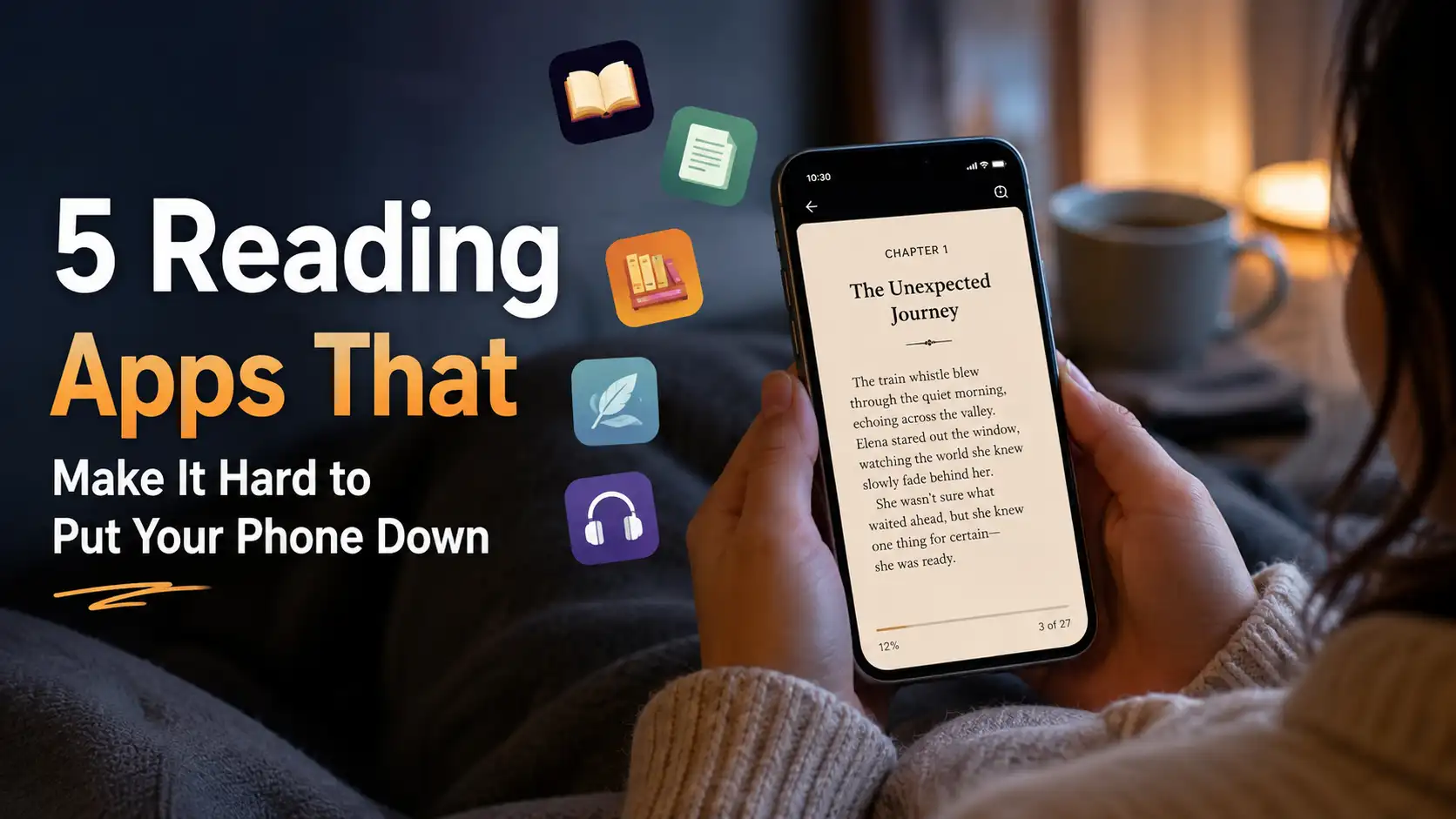
Modern reading apps are also much more than simple digital book readers. Many offer personalized recommendations, reading progress tracking, bookmarks, adjustable fonts, offline access, audiobooks, and other features designed to make reading more convenient. These small touches can make opening a book feel almost effortless.
The interesting part is how quickly that convenience can turn into a habit. You might tell yourself that you’ll read for ten minutes before bed, only to look at the clock later and realize you’ve finished several chapters. When another interesting book is already waiting in your digital library, putting the phone down can become surprisingly difficult.
If you’re looking for an app that can make reading more convenient, engaging, and enjoyable, there are plenty of options worth trying. From massive e-book collections to digital libraries and community-driven stories, these are five reading apps that can make your phone feel more like a personal bookshelf.
Why Reading Apps Are So Addictive
Reading apps remove many of the barriers that can make reading feel inconvenient. Instead of finding a physical book, carrying it around, or visiting a bookstore, you can simply open an app and continue reading. A commute, lunch break, waiting room, or quiet evening can suddenly become an opportunity to finish another chapter.
Many reading platforms also keep the experience moving with recommendations, reading progress, personalized libraries, and huge catalogs. Finish one book and another is ready to catch your attention. It’s almost like having a bookstore that never closes, except this one fits inside your phone.
The Convenience of Having a Library in Your Pocket
One of the biggest advantages of reading apps is portability. A smartphone can hold a surprisingly large collection of digital books without adding any physical weight to your bag. Features such as adjustable font sizes, screen themes, bookmarks, and offline reading can also make digital reading more comfortable for different preferences.
How Personalization Keeps You Reading
Personalized recommendations can make finding your next book much easier. Instead of staring at thousands of titles and wondering what to choose, many apps suggest books based on your interests, previous reading activity, popular trends, or similar titles you’ve enjoyed.
The 5 Best Reading Apps That Make It Hard to Put Your Phone Down
Reading on your phone doesn’t have to mean getting trapped in endless social media scrolling. The right reading app can turn those spare minutes into meaningful reading time while giving you access to books, stories, and audiobooks wherever you go.
Whether you want to buy the latest bestseller, borrow books from a library, discover independent writers, or build a digital collection, these five reading apps offer something different for every type of reader. Let’s take a closer look at the apps that could turn your phone into your favorite reading device.
1. Kindle
Kindle is one of the biggest names in digital reading, and its mobile app brings the Kindle experience to smartphones even if you don’t own a dedicated Kindle e-reader. The app gives readers access to a huge selection of digital books covering fiction, fantasy, romance, thrillers, biographies, business, self-improvement, and countless other categories. With so many titles available, searching for your next book can easily become a reading session of its own.
The app also focuses heavily on convenience. Readers can synchronize their progress across compatible devices, use bookmarks and highlights, add notes, and adjust various reading settings. If you already purchase e-books through Amazon, having your digital library connected to the same ecosystem makes it easy to find a book and continue reading whenever you have a free moment.
Why Kindle Is More Than an E-Book Reader
Kindle’s appeal goes beyond simply replacing paper pages with a smartphone screen. Its reading tools are designed to make longer sessions easier, while synchronization means you don’t have to constantly remember where you stopped. That combination makes Kindle particularly useful for readers who want to turn short pockets of free time into regular reading sessions.
Best Features for Everyday Readers
Adjustable text settings, bookmarks, highlights, notes, and cross-device synchronization make Kindle a practical choice for everyday reading. The biggest advantage may simply be accessibility: your current book is almost always within reach because it’s sitting on a device you already carry everywhere.
2. Libby
If you love reading but don’t want to spend money on every book you want to try, Libby can be a game changer. Developed by OverDrive, the app connects eligible library members with digital books, audiobooks, and other content from participating libraries. Instead of buying a title outright, you can borrow it through your library, making it much easier to explore new authors and genres without constantly opening your wallet.
Libby’s borrowing system also gives reading a natural sense of momentum. Digital loans typically have a limited lending period, so that book sitting on your reading list suddenly has a reason to be opened. Combine that with an enormous library catalog and personalized browsing experience, and it’s surprisingly easy to tell yourself you’ll borrow just one book before ending up with several titles waiting in your virtual bookshelf.
Your Local Library Goes Digital
Libby brings many of the best parts of a traditional library directly to your phone. You can browse available titles, search for specific books, borrow eligible content, place holds when a title isn’t immediately available, and manage your loans without physically visiting a library. For readers who already have access to a participating library, the app can turn a simple smartphone into a portable digital library.
Why Libby Feels Surprisingly Addictive
The real attraction is the freedom to experiment. You can discover a book that looks interesting, borrow it, and start reading without making a purchase commitment. That low-risk approach encourages curiosity, while borrowing periods can give you just enough urgency to keep turning the pages instead of leaving another unfinished book forgotten on your phone.
If you want to improve your writing and make your content clearer and more engaging, check out Improve Your Writing with These Top Paraphrasing Apps.
3. Wattpad
Wattpad takes a very different approach to digital reading by combining stories with a large online community. Rather than focusing exclusively on traditionally published books, the platform is known for user-generated stories written by people around the world. You’ll find romance, fantasy, mystery, science fiction, fan fiction, drama, and plenty of unusual genre combinations that can be difficult to predict.
That variety is one of Wattpad’s biggest strengths. You might open the app looking for one short story and end up following an ongoing series with dozens of chapters. Because many stories are published in installments, Wattpad naturally creates the classic “one more chapter” trap. Just when you think you’re finished reading for the night, another chapter is waiting.
A Never-Ending Stream of Stories
Wattpad’s serialized format makes it particularly easy to keep reading. Instead of consuming a completed book from beginning to end, you can follow stories as they develop and return when new chapters appear. The experience feels closer to following an ongoing television series, except you’re controlling the pace and reading the story yourself.
Discovering New Writers and Genres
The platform is also excellent for discovering writers who may not yet be household names. Readers can explore stories based on genres, interests, popularity, and community activity, which creates plenty of opportunities to stumble across something unexpected. If you enjoy finding stories outside traditional publishing channels, Wattpad can keep your reading list busy for a very long time.
4. Google Play Books
Google Play Books is a convenient choice for readers who want a straightforward digital reading platform that works naturally within Google’s ecosystem. The app supports both e-books and audiobooks, giving you flexibility if you like switching between reading and listening. Its catalog covers a wide range of genres, including fiction, non-fiction, romance, fantasy, business, education, and more, making it easy to find something for almost any mood.
One of its biggest strengths is accessibility. You can browse your library, open a book, and continue reading without needing a dedicated e-reader. For people who already use Android devices and other Google services, the familiar ecosystem can make the app feel especially easy to pick up and use.
A Flexible Reading Experience Across Devices
Google Play Books is designed to make your digital library portable. Depending on the content and supported features, your books and reading progress can follow you across compatible devices, so you aren’t necessarily tied to one screen. You can start reading on your phone during a break and continue later when you have more time.
Features That Make Reading Easier
The app offers useful reading controls that can make longer sessions more comfortable, including adjustable text and display options. The combination of e-books and audiobooks is another advantage, especially if you want to switch from reading with your eyes to listening while commuting, exercising, or doing household chores.
5. Kobo Books
Kobo Books is a strong alternative for readers who want a dedicated digital reading ecosystem with a broad selection of e-books and audiobooks. The app covers numerous genres, from contemporary fiction and romance to fantasy, thrillers, biographies, history, and non-fiction. Its focus on digital reading makes it a natural fit for people who prefer building a portable library rather than relying on physical books.
Kobo can also appeal to readers who want an alternative to some of the larger mainstream e-book ecosystems. Once you have a collection inside the platform, having your books readily available on your smartphone makes it easy to squeeze reading into unexpected moments. A few minutes waiting somewhere can quickly become another chapter.
A Strong Alternative for Dedicated Readers
Kobo is designed with people who spend a lot of time reading in mind. Instead of treating e-books as just another type of digital purchase, its ecosystem puts books and reading at the center of the experience. That makes it appealing if reading is already a regular part of your daily routine.
Why Kobo Deserves a Place on Your Phone
The biggest reason to try Kobo is simply choice. You aren’t limited to one way of enjoying digital books, and having another established reading platform available can make it easier to find titles that match your interests. If you enjoy building a digital library and want your books available wherever you go, Kobo is worth considering.
How to Choose the Best Reading App for You
Choosing the best reading app isn’t necessarily about finding the platform with the biggest library. The better choice depends on how you actually like to read. If you regularly buy new releases, an e-book marketplace may suit you better. If you prefer borrowing books, a library-focused app makes more sense. Meanwhile, readers who enjoy discovering independent stories may get more value from a community-driven platform.
It’s also perfectly fine to use multiple reading apps. You might use Libby for borrowing books, Kindle or Kobo for titles you purchase, and Wattpad when you want something more casual and community-focused. Using different apps for different types of reading can give you more variety without forcing your entire reading habit into one ecosystem.
For Paid E-Books
If you frequently purchase digital books, Kindle, Google Play Books, and Kobo are among the options worth considering. Each platform has its own catalog, ecosystem, and purchasing experience, so think about where you expect to buy most of your books before committing heavily to one platform.
For Free and Library-Based Reading
For readers who want to reduce the cost of their reading habit, Libby can be particularly useful when a participating library is available to them. Being able to borrow digital books instead of purchasing every title lets you explore more genres and authors without turning every reading session into another expense.
For Social and Community Reading
Wattpad is the obvious choice if you enjoy reading as a social and community-driven experience. Its huge collection of user-generated stories gives you opportunities to discover emerging writers, serialized fiction, and unusual takes on familiar genres. It’s particularly appealing if traditional book catalogs sometimes feel too predictable.
Tips for Getting More Reading Done With Your Phone
Your smartphone can be an excellent reading device, but it also happens to be one of the world’s greatest distraction machines. A notification can pull you away from a chapter, and a quick check of social media can turn a planned fifteen-minute reading session into an hour of scrolling. The trick is to make your reading app easier to access than the distractions surrounding it.
Try creating a simple reading routine that fits naturally into your day. You could read during your commute, spend fifteen minutes reading before bed, or open your book whenever you’re waiting somewhere. You don’t need to finish an entire novel in one sitting. Consistent small sessions can add up surprisingly quickly.
Turn Notifications Into Your Enemy
Consider disabling unnecessary notifications while you’re reading, especially alerts from social media, shopping apps, and messaging services that don’t require an immediate response. Your book doesn’t need to compete with every notification that appears on your screen.
For longer reading sessions, your phone’s focus or do-not-disturb mode can be extremely useful. Even twenty or thirty minutes without interruptions can help you stay immersed in a story and get through significantly more pages.
Use Reading Goals Without Making Them a Chore
Reading goals can motivate you, but they shouldn’t turn your hobby into another source of pressure. You don’t need to finish dozens of books every year to become a better reader. Even a few pages each day count, especially if they help you develop a consistent habit.
Instead of setting an intimidating yearly target, try creating a simple daily routine. Ten pages before sleeping or fifteen minutes after dinner may sound small, but those sessions can gradually transform into hundreds of pages over time. The key is consistency, not speed.
The Bottom Line
Reading apps have completely changed how we access books. Instead of carrying a physical novel everywhere, you can have an entire digital library sitting inside your smartphone. Kindle and Kobo provide dedicated e-book ecosystems, Libby brings library borrowing to your screen, Wattpad offers a huge community of user-generated stories, while Google Play Books combines e-books and audiobooks in a convenient platform.
The best part is that each app offers a slightly different reason to keep reading. Whether you enjoy discovering new authors, borrowing books for free, following serialized stories, or building a personal digital collection, there’s an option that can fit your reading style. You may even find that using two or three apps gives you the variety you need.
Ultimately, the hardest part may not be finding something good to read. It may be remembering to put your phone down once you’ve found it. A good story has a way of making “just one more chapter” sound like a perfectly reasonable decision.
FAQs
1. What is the best reading app for beginners?
Kindle and Google Play Books are good starting points for beginners because they offer straightforward interfaces and access to large digital libraries. Kindle may be especially suitable if you already use Amazon’s ecosystem, while Google Play Books can be convenient for users who prefer Google’s services.
2. Which reading app offers free books?
Libby is one of the best options for borrowing free digital books when you have access to a participating library. Wattpad also offers a large collection of user-generated stories that can be read without purchasing individual e-books, although availability and features can vary between titles.
3. Is reading on a phone bad for your eyes?
Reading on a smartphone isn’t automatically harmful to your eyes, but staring at a screen for long periods can contribute to digital eye strain. Taking regular breaks, adjusting screen brightness, increasing text size, and keeping the phone at a comfortable viewing distance can make longer reading sessions easier on your eyes.
4. Can reading apps replace physical books?
For many readers, digital apps can replace physical books for everyday reading because they offer portability, adjustable text, instant access, and large libraries. However, physical books still have advantages for people who enjoy the feel of paper, collecting books, or simply prefer reading without a screen.
5. Which reading app is best for discovering new stories?
Wattpad is particularly useful for discovering community-created and serialized stories because its platform is built around user-generated content. Libby is another good option if you enjoy exploring books you might not normally purchase, especially when your local library provides access to a broad digital catalog.