

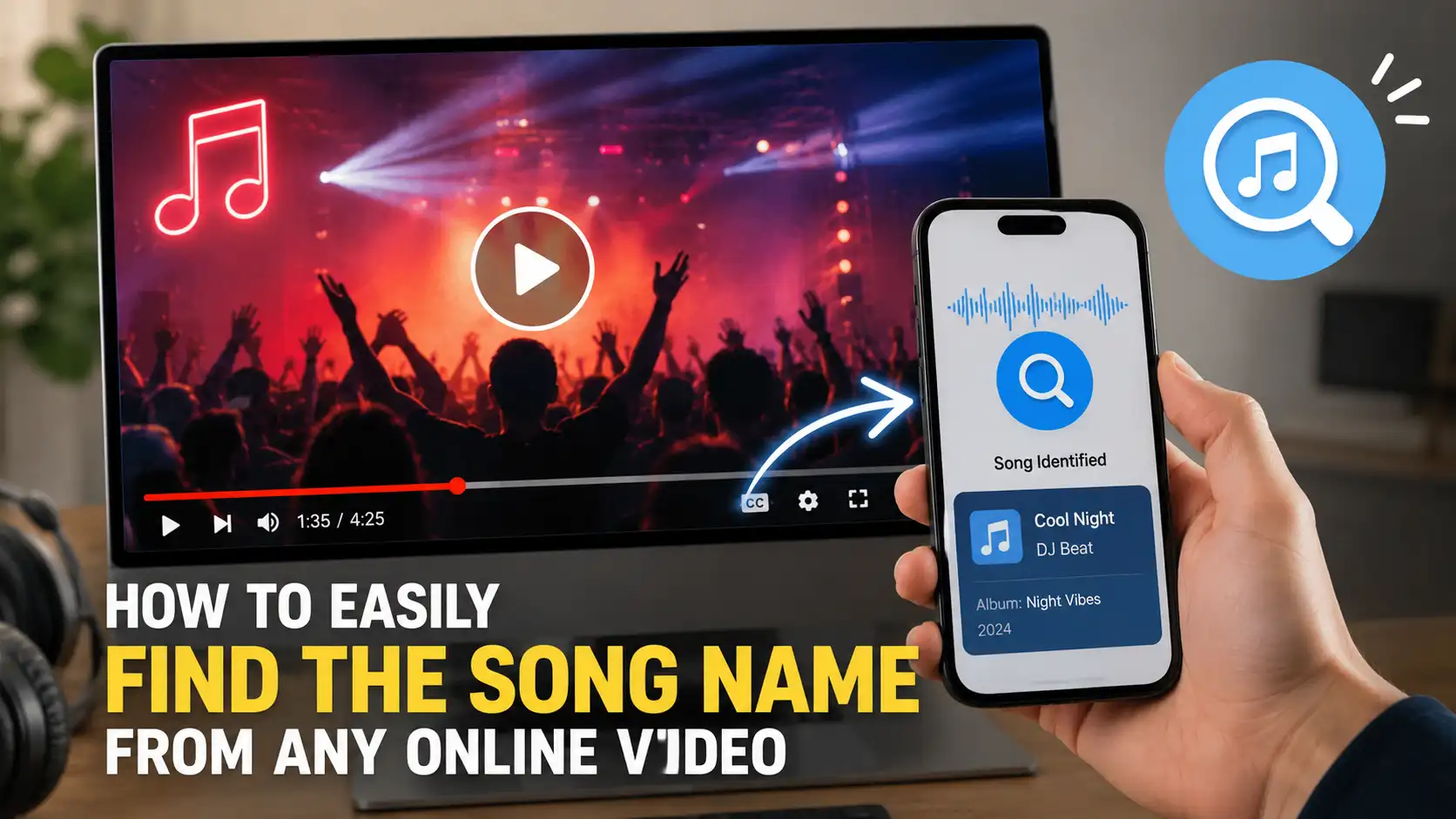
Have you ever watched a YouTube video, TikTok, Instagram Reel, Facebook video, or even a random clip on a website and suddenly heard a song that caught your attention? You like the melody, the beat feels perfect, and you immediately think, “What song is this?” The problem is that the video may never mention the title, leaving you with only a few seconds of music and a lot of curiosity.
Fortunately, finding a song from an online video is much easier than it used to be. You do not necessarily need to know the artist, remember the lyrics, or spend hours scrolling through music catalogs. Music recognition apps, search engines, lyrics searches, social media audio pages, video descriptions, and even comment sections can all help uncover the song.
The challenge is that online videos often use music in less-than-ideal conditions. The song might be playing quietly underneath someone talking, mixed with sound effects, sped up, slowed down, remixed, or included as only a short instrumental section. Sometimes, the version used in the video is also different from the original release.
That is exactly why it helps to know several methods instead of relying on one tool. In this guide, you will learn practical ways to identify songs from almost any online video, including YouTube clips, TikTok videos, Instagram Reels, Facebook videos, remixes, covers, instrumental tracks, sped-up audio, and songs where you can only hear a few words.
Why Finding a Song from a Video Can Be Tricky
Identifying a song from a video sounds simple until you actually try it. If the music is clear and the clip lasts long enough, a recognition app can often identify it within seconds. But online videos are rarely that convenient. Creators may lower the music volume, talk over the chorus, add sound effects, or use an edited version that makes automatic recognition more difficult.
Another problem is that many videos contain music that has been modified from the original recording. A creator might use a sped-up version, slowed-down version, nightcore edit, remix, mashup, cover, or instrumental adaptation. The song may still be recognizable to a human listener, but automated tools can struggle because the audio no longer perfectly matches the version in their databases.
Background Music Is Often Hard to Hear
Background music can be particularly difficult to identify because your recognition tool needs enough clean audio to compare against its database. If someone is speaking over the song, traffic noise is present, or the music is mixed with sound effects, the recognizable parts of the recording can become buried. Whenever possible, find a section where the music is louder and the voice or other noises are quieter, even if that means moving a few seconds backward or forward in the video.
Short Clips Give You Very Little Time
Short-form videos can make identification even harder because you may only hear five or ten seconds of the song. A short clip might also begin in the middle of a verse rather than at a distinctive chorus or instrumental hook. If the first attempt fails, do not immediately assume the song cannot be identified. Try another section of the video, especially one containing vocals, a memorable melody, or a repeated part of the song.
Start with a Music Recognition App
Music recognition apps are usually the fastest place to start because they are specifically designed to match audio against large music databases. Instead of guessing based on genre or lyrics, these services analyze characteristics of the recording and compare them with known tracks. This makes them especially useful when you know absolutely nothing about the song.
The trick is giving the app the best possible audio sample. If you are playing the video on your phone, you can often let the recognition app listen through the microphone. On a computer, you may need to play the video through speakers or use a supported desktop or browser feature. If the first attempt does not work, replay a cleaner section rather than repeatedly scanning the exact same noisy part.
Use Shazam to Identify the Song
Shazam is one of the easiest options for identifying music from a video. Start playing the video at a section where the song is clearly audible, open Shazam, and let it listen for several seconds. When the recording matches something in its database, Shazam can usually provide the song title and artist, and it may also show additional information such as the album or links to streaming services. It works best with recognizable commercial recordings, although heavily edited or obscure audio can still be challenging.
Try Google Song Search
Google can also help when you cannot remember the song title. Depending on your device and available features, you can use Google’s song-search functionality and let it listen to a playing track, or even hum or sing part of the melody. This is particularly useful when the video contains a song that recognition apps cannot immediately match. You do not always need perfect vocals because melody-based searching can sometimes narrow down the possibilities from the tune itself.
Try SoundHound as Another Option
SoundHound is another useful choice when you want to identify music from audio or even from a melody you can sing or hum. It can be worth trying when another recognition service fails because different services may have different databases and matching capabilities. For the best result, use the clearest part of the song available and avoid sections dominated by speech, sound effects, or heavy background noise.
How to Identify a Song from YouTube Videos
YouTube videos often give you more clues than you might expect. Before reaching for a recognition app, check the information surrounding the video itself. The creator may have listed the music in the description, mentioned it in a pinned comment, or included credits somewhere in the video’s information. This can be much faster than trying to identify the audio automatically.
This approach is especially useful for videos such as gaming content, travel videos, tutorials, compilations, vlogs, and cinematic edits where creators commonly use background music from music libraries. Even if the exact song title is not immediately visible, descriptions and comments can provide keywords that make a later search much easier.
Check the Video Description
Open the full YouTube description rather than relying only on the short preview shown beneath the video. Look for sections mentioning music, soundtrack, credits, songs used, or licensed audio. Some creators also include links to the tracks they used, while others list multiple songs alongside timestamps. If the video is several minutes long, these timestamps can save you from guessing which track appears in the section you are interested in.
Look for Music Credits and Timestamps
Music credits are particularly valuable when a video contains several songs. A creator might write the track title and artist next to a timestamp such as 02:35 or 07:18, allowing you to jump directly to the relevant section. If you find several credited songs but are unsure which one you heard, compare their timestamps with the exact moment the music appears in the video.
Read the Comments for Clues
The comments section can sometimes solve the mystery faster than any recognition app. Other viewers may have already asked, “What song is this?” and the creator or another viewer may have answered with the title and artist. Try searching the comments for words such as “song,” “music,” “track,” or “name,” if the platform provides comment-search functionality, and pay particular attention to replies because useful answers are often buried underneath the original question.
Find Songs from TikTok, Instagram, and Facebook Videos
Social media platforms often make song identification easier because the audio used in a video may already be connected to an official or user-created audio page. Instead of trying to recognize the music manually, check the audio information attached to the video first. This method is especially useful for short clips where there is not enough clean audio for a recognition app.
If the platform only shows a generic label such as “original sound,” you still have other options. You can play the video while using a music recognition app, record a short section for later analysis, or search the lyrics if vocals are clearly audible. Combining the platform’s built-in information with an external recognition method usually gives you a much better chance of finding the exact track.
Use the Platform’s Audio Information
On TikTok and Instagram, tap the audio or sound name displayed on the video to open its audio page. You may see the song title and artist immediately, especially when the creator used an officially recognized track. If the audio is labeled as original sound, check other videos using the same audio because another creator may have identified the actual song in their caption or comments. Facebook videos can also contain useful audio details, although the amount of information available depends on the video and how the audio was uploaded.
Record or Play the Clip for Recognition
When the audio page does not reveal the song, use a music recognition service while the video is playing. Choose a section where the music is loudest and contains as little speech as possible. If the social media app makes multitasking difficult, you can use another device to play the clip while your phone listens for the song. Even a short but clean section can sometimes be enough for successful identification.
For creators looking to simplify their workflow, check out 9 Powerful AI Tools That Make Music Creation Effortless to discover AI tools that can make music creation faster and easier.
Identify a Song When Lyrics Are Available
Lyrics can be one of the most powerful clues when music recognition tools fail. You do not need to know the entire chorus or remember every word. Even a distinctive phrase of four or five words can lead you directly to the song when searched correctly. This is particularly helpful with obscure tracks, covers, remixes, and songs that recognition databases do not immediately recognize.
The biggest challenge is getting the words right. Background music, accents, vocal effects, and low audio quality can make lyrics difficult to understand. If you are unsure about a word, try several possible spellings or search using the parts you are most confident about. Sometimes the surrounding words are enough for a search engine to figure out the intended lyric.
Search for a Distinctive Phrase
Focus on a lyric that sounds unusual rather than a generic phrase such as “I love you” or “tonight we dance.” A distinctive combination of words is much more likely to produce the correct result. Search the phrase together with words like “song,” “lyrics,” or “artist” if necessary. You can also combine the lyric with clues from the video, such as the genre or where you heard it, to narrow down the results.
Use Quotation Marks for Exact Lyrics
If you are reasonably sure about the words, put the lyric inside quotation marks when searching. This tells the search engine that you are looking for pages containing that specific phrase rather than separate pages containing the individual words. For example, searching "walking through the city lights" is more precise than simply searching walking city lights song. If your first search produces nothing, remove one or two uncertain words and try again.
Use Online Song-Finder Websites
Online song-finder websites can be useful when you have an actual audio clip instead of just a video link. Some services allow you to upload a short recording, while others can analyze audio from a microphone. These tools provide another option when mobile recognition apps fail or when you want to work with an extracted portion of the video’s soundtrack.
For the best results, avoid uploading a section dominated by conversation or sound effects. A clean recording containing several seconds of the actual music gives the service more information to work with. If the song is heavily edited, try finding the original version of the clip or use a section where the vocals and melody are easiest to hear.
Upload or Record the Audio Clip
Start by creating a short clip containing the clearest part of the song. You do not necessarily need the entire video because a focused audio sample is easier for recognition systems to analyze. If the service supports microphone recording, play the video near the microphone and keep the environment as quiet as possible. When one service cannot identify the track, do not give up immediately because another recognition system may produce a different result.
What to Do When Music Recognition Fails
Sometimes you can play the same song repeatedly and still get absolutely nothing. That does not necessarily mean the song is impossible to find. The problem could be poor audio quality, excessive background noise, an unusual remix, copyright-related alterations, or simply a track that is not present in the recognition service’s database.
Instead of repeatedly scanning the same section, change your approach. Find another part of the video, reduce competing sounds, search for lyrics, inspect comments, or look for the original audio page. Think of song identification like solving a puzzle: if one piece does not fit, you need a different piece rather than forcing the same one into place.
Remove or Reduce Background Noise
If possible, isolate the music from speech, traffic, crowd noise, sound effects, or other competing sounds. You can also lower the volume of the video temporarily when someone is speaking, then raise it again when the music becomes clearer. Even a small improvement in audio clarity can make a difference because recognition systems need the musical fingerprint to stand out from the surrounding noise.
Find a Longer or Cleaner Clip
A longer section can give a recognition service more musical information to analyze. Instead of using a three-second snippet, look for a ten- or twenty-second section containing the chorus or another distinctive part of the recording. If the original video is noisy, search for another upload of the same clip or song because a cleaner version may be much easier to identify.
Try Several Identification Methods
Do not depend entirely on one recognition app. If Shazam fails, try Google song search or SoundHound, then switch to lyrics, video descriptions, comments, or social-media audio pages. Different methods work better under different conditions, so combining two or three clues can turn an unidentified song into an easy match.
How to Identify Instrumental or Remix Songs
Instrumental songs can be more difficult to identify because there are no lyrics to search. However, the melody, rhythm, and arrangement can still give music recognition tools enough information to find the original track. Try to use the most recognizable section, such as a strong guitar riff, piano melody, electronic hook, or repeated instrumental pattern. If automatic recognition fails, search for descriptions of the sound, such as “instrumental song with piano used in TikTok videos,” and combine that with any other clues from the video.
Remixes create another layer of difficulty because the version in the video may sound very different from the original. A remix might change the tempo, add new vocals, cut sections of the song, or combine multiple tracks. In these cases, try identifying the underlying original song first. Once you have the artist and title, search for terms such as “remix,” “edit,” “club mix,” or “TikTok remix” to locate the specific version used in the video.
How to Find Sped-Up and Slowed Songs
Sped-up and slowed-down songs have become extremely common on TikTok, Instagram Reels, YouTube Shorts, and other platforms. Because changing the playback speed alters the characteristics of the recording, some recognition tools may struggle to identify the edited version. If this happens, try finding a section where the vocals or melody are particularly clear, then search the recognizable lyrics or melody instead of relying entirely on automatic recognition.
Another useful approach is to search for the song using the version you suspect. Once you have even a partial clue, add terms such as “sped up,” “slowed,” “reverb,” or “slowed + reverb” to your search. You may discover that the clip comes from a popular edit of an older song rather than a completely different track.
How to Find a Remix or Cover Version
A cover version can sound familiar while still confusing music recognition tools because the recording is not the original version stored in their databases. If the voice, melody, or lyrics sound familiar but the identified result seems wrong, compare the vocals with the original song and consider whether the video uses a cover. Searching a distinctive lyric together with words such as “cover,” “acoustic,” or “female cover” can help narrow down the possibilities.
For remixes, pay attention to the part of the song that remains unchanged. A recognizable chorus, vocal sample, or melody can lead you back to the original track. After finding that original, search for the remix using the artist’s name, song title, and any version-related keywords. This is often much faster than trying to identify an obscure remix directly.
A Simple Step-by-Step Method That Usually Works
Start by checking the video’s audio information, description, credits, and comments. If those do not reveal the song, play the clearest section through Shazam, Google song search, or another recognition service. If the result is still missing, listen carefully for lyrics and search a distinctive phrase, preferably using quotation marks. For instrumental tracks, focus on the melody and try recognition tools with the cleanest available recording.
If none of those methods work, look for a longer or cleaner section of the video and try again. You can also search for the original version if the audio sounds sped up, slowed down, remixed, or covered. In most cases, combining several small clues is far more effective than repeatedly using one identification method and hoping it suddenly works.
Common Mistakes to Avoid
One common mistake is using a very short or noisy section and assuming the recognition service does not know the song. Another is searching generic lyrics that could belong to thousands of songs. People also frequently forget to check the video’s description, comments, or attached audio page before attempting more complicated methods. Finally, do not assume that the first result is automatically the exact version you heard. It could be the original song while the video actually uses a remix, cover, sped-up edit, or slowed version.
Conclusion
Finding a song from an online video does not have to become a frustrating guessing game. Start with the easiest clues first, such as the video’s audio information, description, credits, and comments, then move to music recognition apps and lyric searches. When one method fails, another approach can often provide the missing clue.
The most important thing is to give yourself multiple ways to identify the track. A clean audio sample, a distinctive lyric, a recognizable melody, or even a comment from another viewer can be enough to solve the mystery. With these techniques, you can usually track down the song behind a YouTube video, TikTok, Instagram Reel, Facebook clip, remix, or short-form video much faster.
FAQs About Finding Songs from Online Videos
1. Can I find a song if I only have a short video clip?
Yes, you can often identify a song even when the video contains only a few seconds of audio. Try using Shazam, Google song search, or another music recognition service with the clearest section available. If automatic recognition fails, listen for lyrics, check the video’s comments and description, or search for a longer version of the same clip.
2. Can Google identify a song without knowing the lyrics?
Yes. Google can sometimes identify a song based on its melody, so you do not necessarily need to know the lyrics. You can play the song for the recognition feature or, where supported, hum or sing the melody yourself. This can be especially useful when the video contains instrumental music or vocals that are difficult to understand.
3. What should I do if Shazam cannot recognize the song?
If Shazam fails, try another section of the video with clearer audio and less background noise. You can also try Google song search or SoundHound, search for any lyrics you can hear, and check the video’s description and comments. If the song is sped up, slowed down, remixed, or a cover, try identifying the original track first and then search for the specific version.
4. How can I find a song from a TikTok or Instagram video?
First, tap the audio or sound information attached to the video because the platform may already display the song title and artist. If it only says “original sound,” check other videos using the same audio and look through the comments for clues. You can also play the video while using a music recognition app to identify the track.
5. Can I identify a remix, sped-up song, or slowed version?
Yes, although modified versions can be harder for automatic recognition tools to identify. Try finding the original song through its lyrics, melody, or vocal sample first. Once you know the original title and artist, search for the specific version using terms such as “remix,” “sped up,” “slowed,” or “slowed + reverb.”