

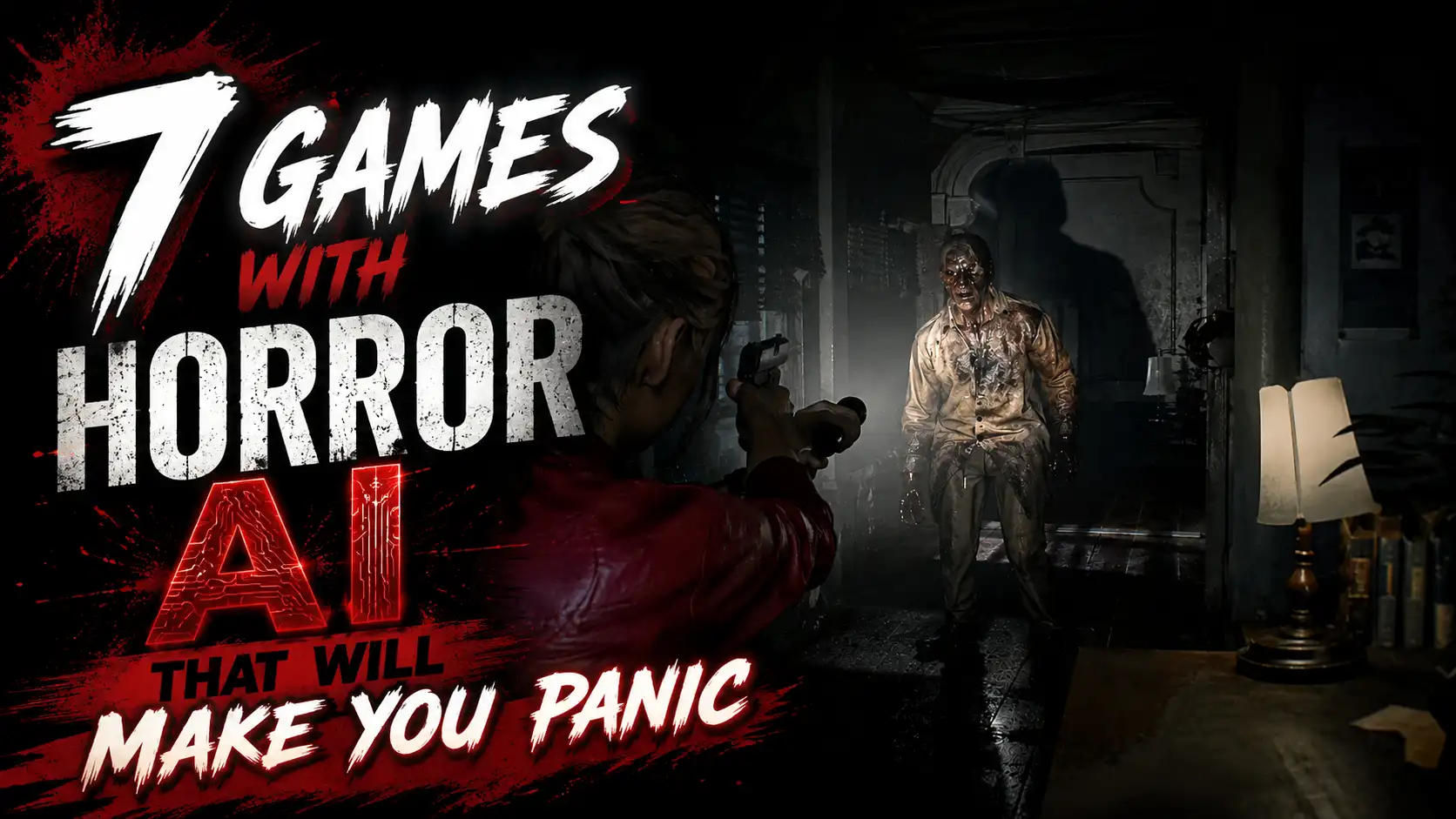
Horror games have evolved far beyond simple jump scares and scripted enemy encounters. Modern titles now rely on sophisticated artificial intelligence to create fear in ways that feel organic, unpredictable, and deeply unsettling. Instead of memorizing enemy patterns or exploiting obvious weaknesses, players are forced to adapt because the monsters hunting them are constantly reacting to their decisions. Every opened door, every footstep, and every hiding place can influence how these terrifying enemies behave.
What makes horror AI especially effective is its ability to create uncertainty. You may think you’ve discovered a safe strategy, only for the enemy to surprise you by searching a different room, investigating an unusual sound, or catching you in a place that worked perfectly just moments ago. Unlike traditional horror games where danger follows a predictable script, AI-driven horror ensures that no two encounters ever feel exactly the same. That uncertainty keeps your heart racing even during moments of complete silence.
If you enjoy horror games that challenge both your nerves and your decision-making skills, intelligent enemy AI can transform an already scary experience into something unforgettable. The following games showcase some of the smartest horror AI ever developed, proving that a single clever enemy can often be far more terrifying than an entire army of monsters. Whether you’re exploring abandoned space stations, haunted houses, or mysterious laboratories, these games will leave you constantly questioning whether you’re truly alone.
Why Horror AI Makes Every Encounter Feel Real
Unlike scripted enemies that always follow the same route or appear at predetermined moments, horror AI reacts dynamically to what players do throughout the game. This creates an experience where survival depends less on memorization and more on observation, patience, and adaptability. Every encounter feels unique because the enemy’s behavior changes depending on your choices, making repeated playthroughs just as tense as the first.
Another reason horror AI is so effective is that it creates the illusion of intelligence. When a creature investigates suspicious noises, notices an opened door, searches beneath a bed, or patrols an area where it previously spotted you, it feels less like a programmed enemy and more like a relentless hunter. That psychological effect keeps players constantly on edge because they can never fully predict what will happen next.
Modern horror developers also combine advanced AI with immersive sound design, realistic lighting, and detailed environmental storytelling. A distant metallic clang, slow footsteps echoing through empty corridors, or the sudden opening of a nearby door can instantly trigger panic. Even when nothing dangerous is happening, the atmosphere convinces players that something terrible could happen at any moment.
What Makes Horror AI So Different from Ordinary Game AI?
Many action games focus on making enemies stronger through higher health, better weapons, or faster movement. Horror games take a completely different approach. Instead of overwhelming players with raw power, they create fear by making enemies appear intelligent, persistent, and unpredictable. This psychological pressure is often much more effective than simply increasing difficulty.
Some horror AI systems even adapt to player habits over time. If you repeatedly hide inside lockers, crawl under beds, or rely on the same escape route, certain enemies begin checking those locations more frequently. Players quickly realize that repeating successful strategies can eventually become dangerous, forcing them to think creatively instead of relying on routine.
Developers also give these enemies believable senses rather than magical knowledge of the player’s exact location. Vision, hearing, environmental awareness, and reaction to movement all contribute to creating realistic behavior. A loud sprint through a hallway, accidentally knocking over an object, or leaving a door open might provide enough information for the enemy to begin searching nearby. These mechanics make survival feel rewarding because escaping danger depends on smart decisions rather than luck alone.
7 Horror Games with AI That Will Make You Panic
The games on this list stand out not simply because they feature terrifying monsters or disturbing environments, but because their enemy AI fundamentally changes how players approach every objective. Each title uses intelligent systems that constantly pressure players into making difficult decisions while maintaining an atmosphere of relentless suspense.
Some games rely on a single unstoppable predator that stalks you throughout the adventure, while others feature multiple enemies working together to corner their prey. Regardless of the approach, one thing remains consistent: every mistake has consequences, and every moment of silence can quickly turn into absolute chaos.
1. Alien: Isolation
If there is one game that perfectly demonstrates how powerful intelligent horror AI can be, it is Alien: Isolation. Rather than overwhelming players with endless enemies, the game focuses on a single Xenomorph that relentlessly hunts Amanda Ripley aboard the abandoned Sevastopol space station. This design choice creates an incredible amount of psychological tension because players know the creature is always somewhere nearby, waiting for an opportunity to strike.
The Xenomorph doesn’t simply follow scripted patrol routes. Instead, it actively searches the environment, investigates suspicious sounds, reacts to player movement, and frequently changes its patrol patterns. Sometimes it disappears into the ventilation system for several minutes, giving players a brief feeling of safety before unexpectedly emerging from another vent directly ahead. These unpredictable encounters ensure that every trip through the station feels genuinely dangerous.
A Two-Layer AI System That Changed Horror Gaming
One of the most fascinating aspects of Alien: Isolation is its innovative two-layer AI design. The game uses a hidden “director” system that provides general hints about the player’s location without revealing exact positions. Meanwhile, the Xenomorph itself relies on its own senses to investigate the environment naturally. This combination prevents the creature from feeling unfair while still maintaining relentless pressure throughout the game.
Because of this system, the Alien often appears incredibly lifelike. It may pause to observe a hallway, inspect nearby rooms, or suddenly abandon one search area after hearing an unexpected noise somewhere else. These behaviors convince players that they are facing an intelligent predator instead of a predictable computer-controlled enemy.
Your Habits Can Become Your Biggest Weakness
Many survival horror games allow players to rely on one effective hiding strategy for the entire adventure. Alien: Isolation deliberately discourages this behavior. Frequently hiding inside lockers, remaining under desks for too long, or repeatedly taking the same escape routes becomes increasingly risky as the Xenomorph starts investigating those areas more often.
This forces players to constantly evaluate their surroundings and develop new survival strategies. Sometimes the safest decision is to remain completely still. Other times, creating a distraction with a noisemaker or carefully timing your movement becomes the only way to survive. Every encounter feels like a unique puzzle where panic often leads directly to failure.
Atmosphere That Amplifies Every AI Decision
The brilliance of the Xenomorph’s AI would not have the same impact without the game’s incredible atmosphere. Dimly lit corridors, flickering emergency lights, malfunctioning equipment, and realistic environmental audio combine to create constant anxiety. Every creaking door, distant metallic clang, and echoing footstep encourages players to imagine dangers that may not even exist.
Even the motion tracker becomes part of the psychological experience. While it helps locate nearby threats, repeatedly looking at its screen can distract players from what’s happening directly in front of them. Many players have survived countless encounters only to be caught because they spent one second too long staring at the tracker instead of watching the corridor ahead.
For many horror enthusiasts, Alien: Isolation remains the benchmark for intelligent horror AI. More than a decade after its release, very few games have managed to replicate the same level of suspense, unpredictability, and psychological terror created by its unforgettable Xenomorph.
2. Amnesia: The Bunker
Unlike previous entries in the Amnesia series, Amnesia: The Bunker abandons heavily scripted horror in favor of a dynamic sandbox experience where a single intelligent monster constantly roams the environment. Set inside a dark World War I bunker, the game traps players in a maze of collapsing tunnels, abandoned storage rooms, and narrow hallways where every decision can attract unwanted attention. Instead of memorizing scripted sequences, you must survive against a creature that reacts naturally to the world around it.
The Beast is rarely predictable. It doesn’t simply appear whenever the game wants to scare you. Instead, it patrols the bunker, listens for unusual sounds, investigates suspicious activity, and emerges from holes in the walls whenever it senses an opportunity. Sometimes you’ll spend several peaceful minutes exploring, only to have your progress interrupted by the monster bursting through a nearby tunnel without warning.
Noise Is Your Greatest Enemy
One of the smartest aspects of The Bunker is how heavily it emphasizes sound. Almost every action has consequences. Firing your revolver, moving heavy objects, forcing open locked doors, or even activating noisy machinery can alert the Beast to your location. This transforms ordinary gameplay mechanics into difficult risk-versus-reward decisions.
Players quickly learn that making progress often requires creating noise, but every loud action increases the possibility of an encounter. Should you waste precious ammunition opening a lock? Should you turn on the noisy generator to restore electricity? These choices constantly build tension because survival depends as much on planning as it does on courage.
Dynamic Exploration Keeps Every Playthrough Fresh
The bunker itself is designed to support the game’s intelligent AI. Resources, locked doors, useful equipment, and objectives can vary between playthroughs, meaning there is rarely a single perfect route through the game. Because the Beast also reacts dynamically, familiar areas never feel completely safe.
You may successfully sneak through a maintenance tunnel during one attempt, only to find the monster investigating the exact same location during your next playthrough. This unpredictability significantly increases replay value while ensuring that experienced players can never become completely comfortable.
Light and Darkness Become Psychological Weapons
Electricity is extremely limited throughout the bunker. The generator requires fuel, and every passing minute brings the facility closer to complete darkness. As lights begin shutting off, the Beast becomes more aggressive, forcing players to balance exploration with generator maintenance.
This mechanic creates continuous psychological pressure. Do you spend valuable fuel keeping the lights on, or save it for later and risk navigating through pitch-black corridors? Even when the monster isn’t nearby, the darkness itself becomes a terrifying obstacle that constantly keeps players on edge.
Rather than relying on scripted jump scares, Amnesia: The Bunker creates fear through systems that interact naturally with one another. Intelligent AI, limited resources, environmental hazards, and player freedom combine to produce one of the most immersive survival horror experiences available today.
3. Hello Neighbor
At first glance, Hello Neighbor may appear less frightening than traditional horror games, but its adaptive AI makes it surprisingly tense. The goal seems simple: sneak into your mysterious neighbor’s house and uncover the secrets hidden in his basement. However, the Neighbor is anything but an ordinary NPC. He constantly watches your behavior, remembers your favorite routes, and adjusts his defenses to stop your next attempt.
Instead of repeating the same patrol path forever, the Neighbor actively studies how you play. If you repeatedly climb through a particular window, don’t be surprised to find it boarded up later. If you always enter through the front door, he may place traps, security cameras, or obstacles exactly where you least expect them. This evolving behavior forces players to think creatively instead of relying on repetition.
Learning From Your Mistakes—and Yours
The Neighbor’s AI is designed around adaptation. Every successful infiltration teaches him something about your strategy. Over time, he begins anticipating your actions, making future attempts increasingly challenging. Few horror games punish repetitive behavior as effectively as this one.
This creates an unusual psychological battle between player and AI. Rather than simply avoiding detection, you’re constantly trying to stay unpredictable. Every decision becomes part of a larger mind game where both sides appear to be learning from each other.
An Unpredictable House Full of Surprises
The house itself plays a major role in supporting the adaptive AI. Multiple entrances, hidden rooms, moving objects, and environmental puzzles provide numerous ways to approach objectives. Because there isn’t just one correct solution, players are encouraged to experiment—but experimentation also increases the risk of being discovered.
The Neighbor can suddenly appear around corners, chase you through rooms, or intercept your planned escape route. Even when you think you’ve outsmarted him, his changing behavior often creates new obstacles that require an entirely different strategy.
Suspense Instead of Constant Terror
Unlike many survival horror games that rely on grotesque monsters, Hello Neighbor creates fear through suspense and uncertainty. The colorful visual style may initially seem inviting, but that contrast actually makes unexpected encounters even more unsettling. Knowing that someone intelligent is constantly observing your actions generates a unique kind of anxiety.
Although opinions on the game’s execution vary, its ambitious adaptive AI system introduced ideas that influenced discussions about intelligent enemy behavior in modern horror games. It remains an interesting example of how learning AI can transform even a relatively simple premise into a memorable psychological experience.
For more timeless gaming recommendations, check out These 7 PS2 Games Are Still Incredibly Fun Today and rediscover classics that remain enjoyable years later.
4. The Outlast Trials
Unlike the previous Outlast games that focused primarily on single-player survival, The Outlast Trials introduces cooperative gameplay while preserving the franchise’s signature feeling of helplessness. Whether you choose to survive alone or alongside friends, one thing remains constant: the enemies are relentless, highly reactive, and capable of turning even the safest-looking room into a deadly trap. With no traditional weapons to fight back, your only real options are to hide, escape, and outsmart the AI.
The game takes place inside horrifying experimental facilities operated by the mysterious Murkoff Corporation. Each trial places players in disturbing environments filled with unstable patients who actively hunt intruders. Every objective becomes more stressful because the enemies don’t simply wait in scripted locations—they patrol, investigate suspicious activity, and react to noise, movement, and environmental changes.
Every Enemy Behaves Differently
One of the strongest aspects of The Outlast Trials is the variety of enemy behaviors. Some enemies move slowly while carefully searching every room, making stealth absolutely essential. Others are much faster and immediately begin chasing anyone they spot, forcing players to improvise escape routes under extreme pressure.
Certain enemies specialize in detecting sound, while others rely more heavily on direct line of sight. Learning these behavioral differences becomes just as important as completing objectives because using the wrong strategy against the wrong enemy often leads to disaster.
Stealth Is Your Only Reliable Weapon
Unlike action-oriented horror games, The Outlast Trials encourages players to avoid confrontation whenever possible. Lockers, beds, dark corners, and narrow hiding spaces become lifesaving tools. However, simply hiding isn’t always enough.
Many enemies continue searching nearby instead of immediately giving up. They’ll inspect rooms, open doors, shine flashlights into dark areas, and occasionally linger just outside your hiding place. Those extra seconds feel agonizingly long, creating some of the most suspenseful moments in the entire game.
Cooperative AI Pressure
Playing with friends doesn’t necessarily make the experience easier. In fact, it often creates entirely new challenges. One teammate making too much noise can attract enemies toward the entire group, forcing everyone to react immediately.
Communication becomes essential. Deciding who distracts an enemy, who completes objectives, and who searches for supplies requires teamwork under constant pressure. The AI’s ability to respond naturally to multiple players ensures that every match feels unpredictable, even after dozens of hours.
Environmental Hazards Increase the Tension
The game’s terrifying AI is further enhanced by its disturbing environments. Flickering lights, blood-covered operating rooms, narrow ventilation shafts, and abandoned laboratories create a constant sense of vulnerability. Every corner feels like the perfect place for an enemy to suddenly appear.
Combined with realistic sound effects and limited visibility, these environments make every footstep feel risky. Players often panic simply because they hear movement nearby, even before confirming whether an enemy is actually approaching.
Rather than relying solely on jump scares, The Outlast Trials builds fear through relentless psychological pressure. Intelligent enemy behavior, unpredictable patrols, and the inability to fight back combine to create an experience that keeps players under constant stress from beginning to end.
5. Sons of the Forest
Although Sons of the Forest is primarily marketed as a survival game, its enemy AI is among the most impressive in the horror genre. Instead of immediately attacking players on sight, the island’s cannibals display surprisingly believable behavior. They observe newcomers from a distance, communicate with one another, test defenses, and gradually become more aggressive depending on how players interact with the environment.
This realistic behavior makes encounters feel far more unsettling than traditional enemy waves. You may notice a cannibal silently watching from the tree line before disappearing into the forest. Hours later, the same group might return with reinforcements, carefully surrounding your base instead of launching a reckless attack.
Cannibals That Behave Like Real Tribes
The island’s inhabitants act less like ordinary video game enemies and more like organized communities. Some appear curious rather than immediately hostile, cautiously approaching before retreating. Others become aggressive only after repeated confrontations or if players destroy important areas within their territory.
This gradual escalation creates constant uncertainty. Because not every encounter ends in violence, players never know whether the figures emerging from the forest are simply observing or preparing for a coordinated assault.
Enemies React to Your Base
Base building isn’t just about crafting shelter—it directly influences enemy behavior. As your settlement grows larger and stronger, nearby cannibal tribes begin treating you as a greater threat. Larger attacks become increasingly common, encouraging players to continuously improve their defenses.
Cannibals also exploit weaknesses in your construction. They’ll climb over walls, attack vulnerable entrances, or attempt to isolate players from one another. This makes defensive planning feel meaningful because careless designs can quickly become liabilities.
Mutants Add Another Layer of Unpredictability
Beyond the cannibals, the island is also home to horrifying mutants that behave differently from ordinary enemies. Some charge aggressively without hesitation, while others lurk inside dark caves waiting for unsuspecting explorers. Their unique movement patterns prevent players from relying on a single combat strategy.
Exploring underground cave systems becomes especially terrifying because visibility is extremely limited. Every strange sound echoes through the darkness, making it difficult to determine whether danger is approaching from nearby or much deeper within the cave.
A Living World That Never Feels Static
Perhaps the greatest achievement of Sons of the Forest is how alive its world feels. Wildlife, weather, changing seasons, and intelligent enemy behavior constantly interact to create unexpected situations. A peaceful afternoon gathering resources can suddenly become a desperate fight for survival after a scouting party discovers your location.
Because the AI behaves differently depending on time of day, environmental conditions, and previous encounters, no two survival stories unfold exactly the same way. That unpredictability transforms the island into a genuinely frightening place where danger always feels just beyond the next tree.
6. Dead by Daylight
Dead by Daylight is best known as an online multiplayer horror game where four Survivors attempt to escape while one Killer hunts them down. Because the standard gameplay revolves around human-controlled Killers, many people assume the game doesn’t belong in discussions about horror AI. However, its custom matches, tutorials, training modes, and especially the recently introduced AI-controlled Bots demonstrate just how far intelligent behavior has evolved within the game.
Instead of acting like simple practice dummies, Survivor Bots are capable of repairing generators, rescuing teammates from hooks, healing injured allies, hiding inside lockers, avoiding dangerous areas, and even making surprisingly smart decisions during high-pressure situations. For newer players, these Bots provide a realistic introduction to the game’s mechanics, while experienced players often find themselves impressed by how naturally they react during matches.
Bots That Understand Objectives
Many games treat AI teammates as little more than moving targets, but Dead by Daylight gives its Bots clear priorities. They constantly evaluate the state of the match before deciding what action should come next. If generators need repairing, they’ll search for the safest opportunity to work on them. If another Survivor is hooked, they’ll determine whether a rescue can be performed without immediately sacrificing themselves.
This objective-based decision-making makes matches feel surprisingly believable. Instead of randomly wandering around the map, Bots actively contribute to the team’s overall progress, forcing players to think strategically even when practicing alone.
Stealth and Survival Behaviors
The AI also understands many of the stealth mechanics that define Dead by Daylight. Bots crouch behind obstacles, avoid the Killer’s line of sight, abandon generators when danger approaches, and occasionally create clever escape routes using windows and wooden pallets.
Although skilled human players remain more unpredictable, the Bots demonstrate enough awareness to create genuinely tense situations. Watching an AI teammate narrowly avoid a Killer before disappearing into nearby vegetation can feel surprisingly authentic.
Constant Improvements Through Updates
Behavior Interactive continues refining Bot intelligence through regular updates. Pathfinding, objective selection, teamwork, and chase behavior have all improved significantly since the feature’s introduction. As the AI evolves, it becomes increasingly useful for both practice and casual offline experiences.
These improvements also benefit players who want to learn new Killers or experiment with different Survivor builds without immediately entering competitive online matches. Smarter Bots create better practice sessions while maintaining much of the tension that makes the game enjoyable.
Psychological Pressure Never Disappears
Even when facing AI-controlled opponents or playing alongside AI teammates, Dead by Daylight maintains its signature atmosphere of constant anxiety. Every heartbeat, every failed skill check, and every distant scream reminds players that danger is never far away.
Although human opponents remain the game’s primary attraction, the intelligent Bots prove that carefully designed AI can successfully recreate much of the suspense, unpredictability, and decision-making that define one of the world’s most popular multiplayer horror games.
7. Lethal Company
Few indie horror games have exploded in popularity as quickly as Lethal Company. At first glance, its low-poly graphics and humorous moments may make it appear less frightening than traditional survival horror games. However, once players begin exploring abandoned industrial facilities on hostile moons, they quickly discover that the game’s intelligent enemy behavior creates an incredible amount of tension.
Working as employees tasked with collecting valuable scrap, players must navigate dark buildings filled with unpredictable creatures while racing against limited time and increasing danger. Every expedition becomes a balancing act between greed and survival, as staying longer usually means earning more money—but also dramatically increases the chances of encountering deadly enemies.
Every Creature Has Its Own Hunting Style
One of Lethal Company’s greatest strengths is the diversity of its enemy AI. Rather than sharing similar attack patterns, each creature behaves according to its own unique rules. Some rely on sound to locate prey, while others patrol specific territories or aggressively chase anyone who enters their field of vision.
Because every enemy follows different behavioral logic, players must constantly adapt their strategies. Learning how one creature works doesn’t necessarily prepare you for the next encounter, making exploration consistently unpredictable throughout the game.
Communication Can Save—or Doom—Your Team
Cooperative gameplay introduces another fascinating layer to the AI experience. Players often split up to collect scrap more efficiently, relying on voice communication to report dangers. However, panic can quickly destroy coordination when multiple threats appear at once.
One teammate accidentally attracting an enemy can force everyone else to abandon carefully planned routes. Meanwhile, another player may unknowingly lead a monster directly back to the group’s extraction point. These unscripted moments create memorable horror stories that feel completely unique every time.
The Environment Works Together with the AI
Dark hallways, malfunctioning lights, narrow staircases, and maze-like interiors all amplify the effectiveness of the enemy AI. Limited visibility means players frequently hear strange noises long before identifying their source, creating constant uncertainty during exploration.
Outside the facilities, the danger continues. Nighttime introduces additional threats, while the journey back to the ship becomes increasingly stressful as players attempt to carry valuable scrap without attracting unwanted attention. Every successful mission feels like a genuine accomplishment because survival is never guaranteed.
Fear Through Unpredictability
Unlike horror games that depend on scripted scares, Lethal Company generates fear through unpredictable interactions between players, enemies, and the environment. A mission that begins calmly can descend into complete chaos within seconds after one small mistake.
This emergent style of gameplay ensures that every session tells a different story. Whether you’re laughing with friends one moment or desperately running for the exit the next, the intelligent AI constantly creates situations that are both entertaining and terrifying. It’s a perfect example of how modern horror doesn’t always need photorealistic graphics to deliver unforgettable scares.
Conclusion
Horror games have changed dramatically over the years, and one of the biggest reasons is the advancement of artificial intelligence. Instead of relying solely on scripted events and predictable enemy patterns, modern developers are creating intelligent opponents that react to player behavior, investigate suspicious activity, and adapt to changing situations. This evolution has made horror games far more immersive because every encounter feels personal and unpredictable.
The seven games featured in this list each showcase a different approach to horror AI. Alien: Isolation demonstrates how a single intelligent predator can keep players under constant psychological pressure, while Amnesia: The Bunker turns every loud noise into a life-or-death decision. Hello Neighbor introduces adaptive learning that punishes repetitive strategies, The Outlast Trials emphasizes relentless pursuit and teamwork under pressure, Sons of the Forest creates believable tribal behavior, Dead by Daylight showcases increasingly capable AI Bots alongside its multiplayer experience, and Lethal Company proves that dynamic AI interactions can generate unforgettable horror moments even in cooperative gameplay.
What truly separates these games from traditional horror titles is their ability to surprise players long after the initial playthrough. Because enemy behavior is influenced by player actions rather than fixed scripts, every session feels slightly different. That uncertainty keeps players alert, forcing them to rethink familiar strategies and constantly adapt to new situations.
If you’re searching for horror games that go beyond simple jump scares, these titles deserve a place on your wishlist. Their intelligent AI systems don’t just make the games more challenging—they make them genuinely terrifying. Whether you’re hiding from an unstoppable alien, escaping experimental facilities, surviving against intelligent cannibals, or collecting scrap on abandoned moons, one thing is certain: panic is never far away when your enemy is smart enough to hunt you like real prey.
FAQs
1. Which horror game has the smartest AI?
Many players consider Alien: Isolation to have the smartest horror AI ever created. Its Xenomorph reacts dynamically to player behavior, investigates sounds, changes patrol routes, and rarely behaves the same way twice, making every encounter feel unique.
2. Are horror games with adaptive AI more difficult?
Generally, yes. Adaptive AI learns from player actions or reacts dynamically to changing situations, making it much harder to rely on repetitive strategies. Players must constantly adjust their tactics instead of memorizing enemy patterns.
3. Can I enjoy these games if I’m new to horror games?
Absolutely. While some titles are challenging, beginners can still enjoy them by starting on easier difficulty settings. Games like Lethal Company and Dead by Daylight also offer cooperative gameplay, allowing friends to share the experience and reduce the pressure.
4. Do horror AI systems actually learn from players?
Some games feature AI that genuinely adapts to player habits, while others use sophisticated behavior systems that create the illusion of learning. Either way, the result is a more dynamic and unpredictable experience compared to traditional scripted enemies.
5. Which game on this list is the scariest overall?
Fear is subjective, but Alien: Isolation and Amnesia: The Bunker are widely regarded as two of the most terrifying horror games ever made because of their relentless AI, immersive environments, and constant psychological tension.