

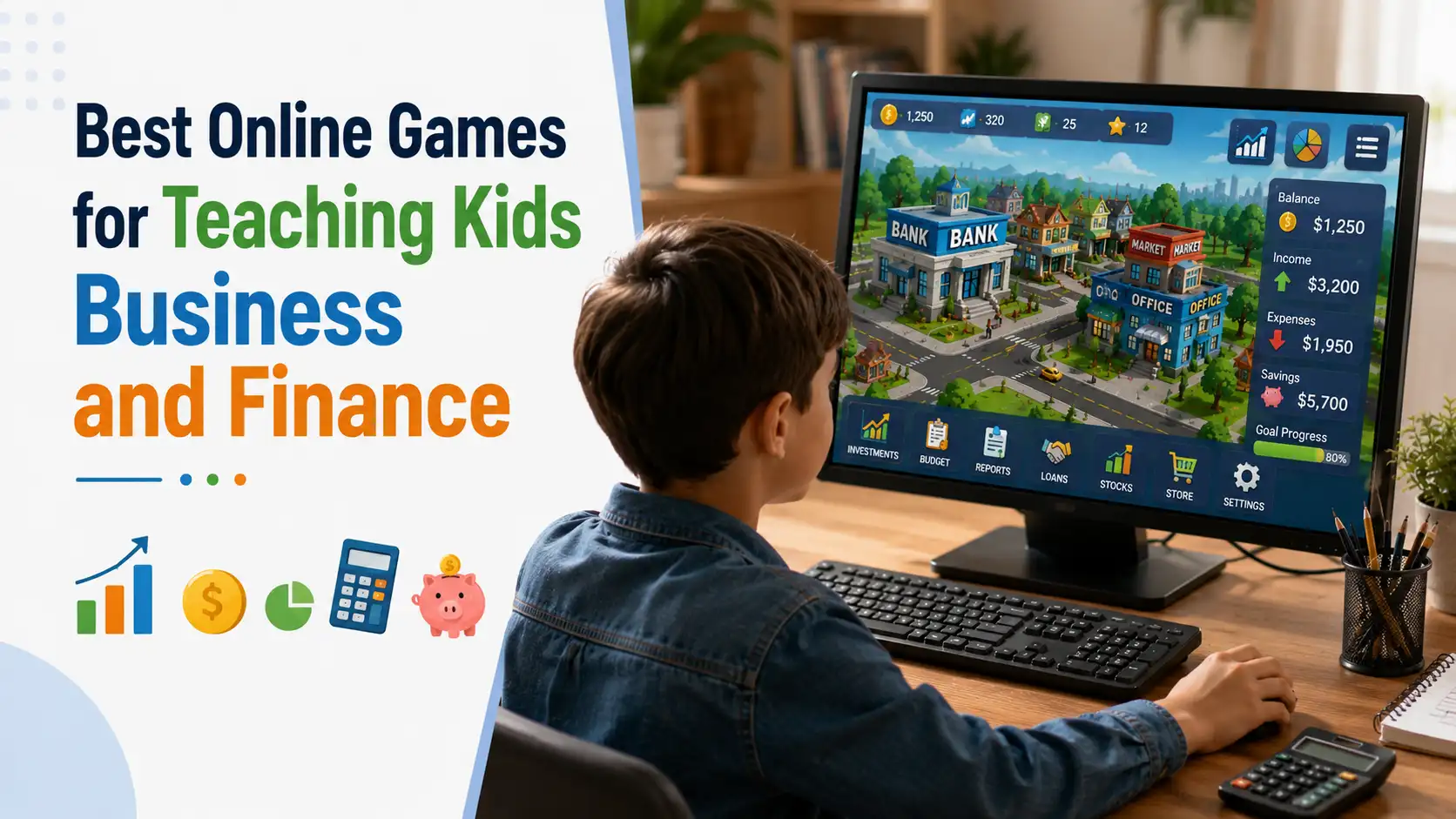
Teaching children about money can sometimes feel like an impossible task. Terms like budgeting, investing, profit, and expenses may sound too advanced for younger learners, especially when they’re introduced through textbooks or lengthy explanations. Fortunately, today’s online games offer a far more engaging way to build financial literacy. Instead of simply reading about business concepts, kids can experience them firsthand by making decisions, solving problems, and managing virtual businesses in fun and interactive worlds.
Many educational games disguise learning behind exciting gameplay. Children may think they’re running a restaurant, designing an amusement park, or managing a virtual city, but they’re also learning how to allocate resources, calculate risks, satisfy customers, and grow a business sustainably. These practical experiences help them understand that money isn’t just something to spend—it’s a tool that requires planning, responsibility, and smart decision-making.
Whether you’re a parent looking for productive screen time or a teacher searching for creative learning resources, business simulation games can be valuable educational tools. The games featured in this article combine entertainment with meaningful lessons that introduce entrepreneurship, budgeting, investing, and financial management in ways children can easily understand and enjoy.
Why Online Games Are Great for Financial Education
Traditional financial education often relies on theory, but games encourage children to learn through action. Instead of memorizing definitions, kids actively solve financial problems, make purchasing decisions, and experience the consequences of both good and bad choices. This hands-on learning approach helps concepts stick because children connect lessons with memorable gameplay experiences rather than abstract explanations.
Another major advantage is that online games create a safe environment for experimentation. Players can take risks, make mistakes, lose virtual money, and immediately try different strategies without facing real-world consequences. This freedom builds confidence while encouraging critical thinking, patience, and adaptability—qualities that are essential for financial success later in life.
What Kids Can Learn from Business Simulation Games
Business games teach much more than simply earning virtual currency. They encourage children to think like entrepreneurs by balancing income with expenses, managing employees, improving customer satisfaction, and planning for future growth. These games often reward long-term thinking over quick rewards, helping children appreciate the value of careful planning.
At the same time, kids naturally develop transferable life skills. They improve problem-solving abilities, strengthen mathematical thinking, practice decision-making under pressure, and learn that persistence often leads to better outcomes than rushing into choices. These lessons extend well beyond gaming and become valuable skills for school, careers, and everyday life.
Budgeting and Expense Management
Many business games begin with limited resources, forcing players to prioritize their spending carefully. Children quickly discover that spending all their money immediately often creates bigger problems later. Learning how to balance immediate needs with future goals becomes one of the first financial habits they develop through gameplay.
Profit, Investment, and Long-Term Growth
As games become more advanced, players realize that making money isn’t enough. Successful businesses grow because profits are reinvested into better equipment, larger facilities, employee training, or new products. Kids begin understanding that patience and strategic investment usually produce greater rewards over time.
Risk Assessment and Smart Decision-Making
Every business involves uncertainty, and many simulation games introduce this concept naturally. Whether deciding to launch a new product, expand a business, or purchase expensive upgrades, players must evaluate whether the potential reward outweighs the possible risks. These situations encourage thoughtful decision-making rather than impulsive choices.
How to Choose the Right Business Game for Your Child
Not every business game is suitable for every age group. Younger children generally benefit from colorful games with simple objectives and straightforward mechanics, while older kids may enjoy more detailed simulations that introduce economics, supply chains, and long-term financial planning. Choosing an age-appropriate game ensures children remain engaged without becoming overwhelmed.
Parents should also consider whether a game encourages creativity, strategic thinking, and ethical decision-making rather than simply maximizing profits. The best educational games reward problem-solving, customer satisfaction, teamwork, and responsible resource management alongside financial success, creating a more balanced learning experience.
Best Online Games for Teaching Kids Business and Finance
The following games successfully combine entertainment with practical financial education. Each one introduces different business concepts while remaining enjoyable enough that children may not even realize how much they’re learning.
1. Roblox Business Simulation Games
Roblox is much more than a single game—it’s an enormous platform featuring thousands of user-created experiences. Among its countless worlds are restaurant simulators, supermarket management games, retail stores, factory builders, theme parks, and tycoon experiences that expose children to basic business principles. Because the platform offers such variety, kids can explore industries that match their personal interests while learning valuable financial lessons.
Many Roblox business games reward efficient management rather than random spending. Players earn money by serving customers, upgrading facilities, hiring workers, and expanding operations. As businesses become larger, children naturally learn about balancing income with operating costs, making smart investments, and improving customer satisfaction to increase long-term profitability.
Business Lessons Kids Learn
- Managing operating expenses
- Understanding profits and losses
- Customer satisfaction
- Business expansion strategies
- Resource management
- Long-term planning
2. RollerCoaster Tycoon Touch
Building an amusement park may sound like pure entertainment, but RollerCoaster Tycoon Touch quietly teaches many important business concepts. Players receive a limited budget to construct attractions, decorate their park, and improve visitor experiences. Every ride costs money, every upgrade requires investment, and every decision affects future income.
Children soon realize that successful parks aren’t built by spending money as quickly as possible. Instead, they must consider guest preferences, park efficiency, attraction popularity, and maintenance costs. Expanding too quickly can leave the park struggling financially, while thoughtful planning creates steady growth and higher profits.
Business Lessons Kids Learn
- Budget management
- Return on investment
- Customer experience
- Business growth strategies
- Pricing decisions
- Financial planning
3. Lemonade Stand
Despite being one of the oldest business simulation games ever created, Lemonade Stand remains one of the most effective tools for teaching entrepreneurship. Players purchase ingredients, monitor weather forecasts, determine pricing, and attempt to maximize daily profits while responding to changing market conditions.
The simplicity of Lemonade Stand makes it particularly suitable for younger children. Even though the mechanics are easy to understand, the lessons are surprisingly sophisticated. Kids learn that pricing affects demand, weather influences customer behavior, and buying too many supplies can reduce profits. These ideas form the foundation of many real-world business principles.
Business Lessons Kids Learn
- Supply and demand
- Inventory management
- Product pricing
- Market analysis
- Profit calculation
- Risk management
4. Game Dev Tycoon
Game Dev Tycoon introduces children to the exciting world of entrepreneurship by placing them in charge of a small video game company. Players begin in a modest garage with limited resources, gradually building their studio into a globally recognized business. Along the way, they must research new technologies, hire talented employees, create innovative games, and compete with other companies in an ever-changing market.
The game demonstrates that successful businesses don’t grow overnight. Every project requires careful budgeting, thoughtful planning, and continuous improvement. Players quickly learn that poor financial decisions can delay growth, while smart investments in research and skilled employees often lead to better products and higher profits. It also highlights the importance of adapting to market trends without abandoning long-term goals.
Business Lessons Kids Learn
- Business planning
- Employee management
- Research and development
- Product investment
- Budget allocation
- Long-term company growth
5. SimCompanies
SimCompanies is one of the most realistic online business simulation games available today. Instead of focusing on a single business, players participate in a living economy where they manufacture products, purchase raw materials, negotiate with other players, and respond to changing market prices. Every decision directly impacts profitability and competitiveness.
Because the game’s economy changes based on player activity, children gain valuable insight into supply, demand, competition, and pricing strategies. They learn that market conditions constantly evolve, requiring businesses to stay flexible and make informed decisions rather than relying on luck. Older children and teenagers interested in economics may find this game particularly rewarding.
Business Lessons Kids Learn
- Supply and demand
- Market competition
- Manufacturing costs
- Pricing strategies
- Trade negotiation
- Economic forecasting
For parents exploring kid-friendly tech beyond learning games, 5 Smartwatches That Help Parents Stay Connected with Their Kids is also worth reading.
6. Capitalism Lab
Capitalism Lab offers one of the deepest business simulations ever created. While it is more suitable for teenagers than younger children, it provides an incredibly realistic look at how corporations operate. Players oversee manufacturing, retail, marketing, product development, research, investments, and expansion across multiple industries.
The game’s complexity encourages analytical thinking and long-term planning. Success depends on understanding customer demand, monitoring competitors, controlling production costs, and investing wisely. Although beginners may need time to learn its systems, the experience closely mirrors real-world business management and corporate strategy.
Business Lessons Kids Learn
- Corporate management
- Financial forecasting
- Strategic investments
- Product development
- Marketing decisions
- Competitive analysis
7. Monopoly GO!
Inspired by the classic Monopoly board game, Monopoly GO! introduces children to property ownership, negotiation, and wealth building through a colorful mobile experience. Players collect properties, upgrade landmarks, complete events, and manage in-game resources while interacting with friends and other players around the world.
Although simplified compared to real investing, Monopoly GO! still teaches valuable concepts about asset ownership and long-term value. Children discover that owning income-generating properties often creates better financial stability than spending money impulsively. The game also encourages patience and strategic planning instead of chasing immediate rewards.
Business Lessons Kids Learn
- Asset management
- Property investment
- Resource allocation
- Long-term planning
- Strategic spending
- Financial decision-making
8. Idle Supermarket Tycoon
Idle Supermarket Tycoon places players in charge of building and expanding a successful supermarket business. Beginning with a small grocery store, players gradually unlock new departments, improve services, hire managers, and increase customer satisfaction to maximize profits.
Because expansion requires balancing revenue and expenses, children naturally learn that every improvement comes with a cost. Investing too quickly can create financial strain, while waiting too long may slow business growth. Finding the right balance becomes one of the game’s most valuable educational lessons.
Business Lessons Kids Learn
- Store management
- Operational efficiency
- Budget control
- Customer satisfaction
- Employee management
- Business expansion
9. Tiny Tower
Tiny Tower challenges players to construct and manage a skyscraper filled with apartments, restaurants, retail stores, and entertainment businesses. Each floor generates income, but only if residents are assigned suitable jobs and businesses are stocked with inventory efficiently.
The game demonstrates how organization and planning contribute to financial success. Players constantly balance expansion costs against expected profits while ensuring businesses remain productive. The simple graphics make the game approachable for younger audiences without sacrificing meaningful economic concepts.
Business Lessons Kids Learn
- Resource management
- Workforce planning
- Inventory control
- Business organization
- Income generation
- Investment priorities
10. Farm Together
Farm Together may appear to be a relaxing farming game, but it quietly introduces many important financial principles. Players plant crops, raise animals, expand farmland, and purchase equipment while managing limited money and resources. Every investment influences future productivity and profitability.
Children soon understand that successful farms require careful scheduling and planning. Spending all available money on decorations instead of productive equipment may delay progress, while investing in efficient tools helps generate larger returns over time. This creates an excellent introduction to investment thinking in a calm and enjoyable environment.
Business Lessons Kids Learn
- Investment planning
- Resource allocation
- Budget management
- Production efficiency
- Long-term growth
- Financial responsibility
Features That Make Business Games Educational
Not every simulation game provides meaningful financial education. The best ones encourage players to think critically by presenting realistic challenges that require planning, patience, and adaptability. Games that reward thoughtful decision-making rather than random luck often provide the greatest educational value because children can clearly see the connection between their choices and the outcomes they experience.
Educational business games also present financial concepts gradually instead of overwhelming players with complicated systems from the beginning. As children gain experience, they naturally encounter more advanced topics such as investing, market competition, employee management, and strategic expansion. This gradual learning curve keeps gameplay enjoyable while continuously introducing new financial ideas.
Realistic Economic Systems
Games with dynamic economies help children understand that prices, customer demand, and business performance constantly change. Learning to adapt to these changes builds flexibility and encourages players to evaluate situations before making financial decisions.
Meaningful Consequences
The strongest educational games allow mistakes to become learning opportunities. Poor investments, overspending, or ignoring customer satisfaction usually result in lower profits, teaching children that thoughtful planning is often more rewarding than acting impulsively.
Tips for Parents and Teachers
Parents and teachers play an important role in helping children get the most educational value from business simulation games. Instead of treating these games as simple entertainment, they can ask questions that encourage critical thinking. For example, asking why a child decided to expand a business, increase prices, or save money for future upgrades helps reinforce the financial concepts learned during gameplay.
It’s also helpful to connect virtual experiences with real-life situations. If a child learns about budgeting in a game, parents can introduce a small weekly allowance or savings challenge to practice those same skills. Teachers can even use business simulation games as classroom activities, allowing students to discuss strategies, compare outcomes, and explain how different financial decisions affected their success.
Encourage Goal Setting
Before starting a game, encourage children to set simple financial goals. These could include saving enough virtual money to unlock a new business, increasing profits by a certain percentage, or expanding without going into debt. Setting goals teaches planning and gives children a sense of accomplishment when they achieve them.
Talk About Mistakes
Children shouldn’t be discouraged when a virtual business fails. Instead, mistakes should be viewed as valuable learning opportunities. Discussing what went wrong and how different decisions could have produced better results helps build resilience, critical thinking, and confidence in solving financial problems.
How Business Games Prepare Kids for the Future
The world is becoming increasingly connected to technology, entrepreneurship, and digital finance. Even if children never become business owners, understanding how money works will benefit them throughout life. Business simulation games introduce these ideas early, making financial literacy feel approachable instead of intimidating.
Many careers require budgeting, project management, teamwork, and strategic thinking. By playing educational business games, children practice these skills in an enjoyable environment where experimentation is encouraged. Over time, they develop habits such as planning ahead, evaluating risks, solving problems, and making informed decisions—abilities that remain valuable in school, work, and everyday life.
Choosing Safe Online Games for Kids
While business games offer many educational benefits, parents should always ensure the games are appropriate for their child’s age. Some online games include advertisements, chat features, or optional in-game purchases that may not be suitable for younger players. Reviewing game settings and enabling parental controls can create a safer learning environment.
Whenever possible, choose games that emphasize creativity, strategy, and problem-solving rather than excessive spending or competitive pressure. Educational gameplay should encourage children to think critically, learn from experience, and enjoy the process of building something successful rather than simply collecting virtual rewards.
Look for Age-Appropriate Content
Games designed for younger children should feature easy-to-understand objectives, simple controls, and positive learning experiences. Older children and teenagers can gradually move toward more detailed business simulations that introduce advanced financial concepts without becoming overly complicated.
Balance Gaming with Real-Life Learning
Online games work best when combined with real-world financial conversations. Encouraging children to save money, compare prices while shopping, or create simple budgets allows them to apply what they’ve learned in games to everyday situations. This combination strengthens financial literacy far beyond the screen.
Conclusion
Teaching children about business and finance doesn’t have to involve complicated lessons or boring lectures. The right online games transform important financial concepts into engaging experiences that inspire curiosity, creativity, and strategic thinking. By managing virtual businesses, balancing budgets, investing wisely, and solving real-world challenges, children develop practical skills that will benefit them throughout their lives.
Whether they’re building a supermarket, running an amusement park, managing a game development studio, or operating a virtual lemonade stand, every decision teaches valuable lessons about responsibility, planning, and smart money management. When combined with guidance from parents and teachers, these games become far more than entertainment—they become powerful educational tools that help prepare children for a financially confident future.
FAQs
1. At what age can kids start learning business and finance through online games?
Many children can begin learning basic financial concepts as early as six or seven years old through simple business simulation games. As they grow older, they can gradually explore more advanced games that introduce investing, market competition, budgeting, and entrepreneurship in greater depth.
2. Are business simulation games better than traditional financial lessons?
Business games should complement, not replace, traditional learning. They make financial concepts easier to understand by allowing children to practice decision-making in realistic situations, while classroom lessons and discussions provide the theory behind those experiences.
3. Do these games require children to spend real money?
Most educational business games can be enjoyed without spending real money, although some include optional in-app purchases. Parents should review each game’s settings and disable unnecessary purchases if needed to ensure a safe learning experience.
4. Which game is best for younger children who are just starting?
Simple games like Lemonade Stand, Tiny Tower, and beginner-friendly Roblox business simulations are excellent starting points. They introduce budgeting, earning money, and managing resources without overwhelming younger players with complicated mechanics.
5. Can online business games inspire future entrepreneurs?
Absolutely. Many successful entrepreneurs developed an interest in business by experimenting with strategy and simulation games during childhood. These games encourage creativity, problem-solving, leadership, and financial thinking, helping children build a strong foundation for future careers or business ventures.