

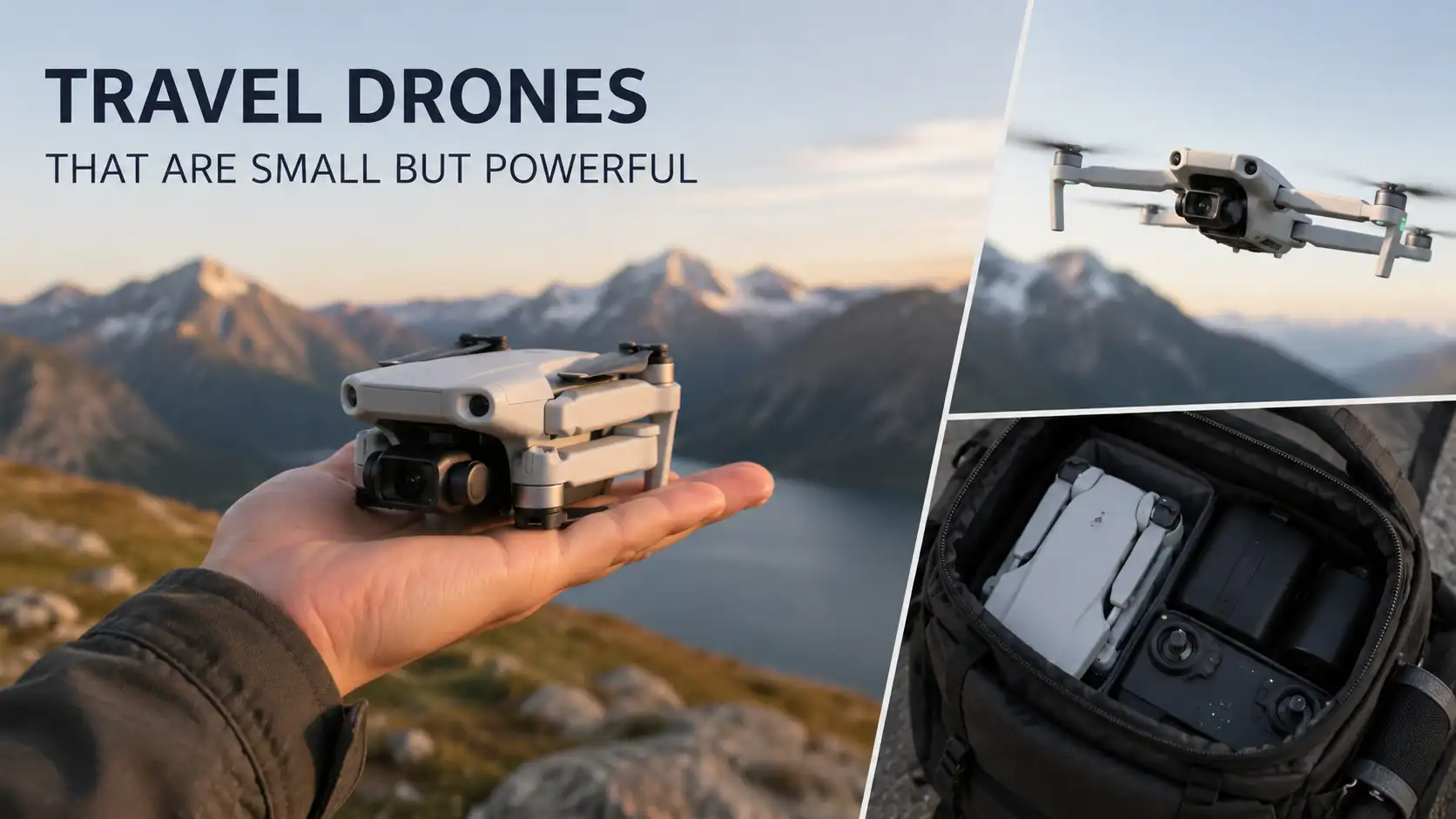
Travel photography and videography have evolved dramatically over the last decade. What once required expensive camera equipment, helicopters, or professional film crews can now be accomplished with a compact drone that fits neatly inside a backpack. As travel content continues to dominate social media platforms, travelers are increasingly searching for creative ways to document and share their adventures. Drones have emerged as one of the most valuable tools for accomplishing this goal, providing perspectives and cinematic angles that traditional cameras simply cannot replicate.
Whether you’re exploring tropical beaches, hiking through mountain trails, wandering historic city streets, or discovering hidden natural wonders, a travel drone can completely transform the way you capture memories. Instead of relying solely on ground-level photography, you can showcase destinations from breathtaking aerial perspectives that reveal their true scale and beauty. These unique viewpoints not only make travel content more visually impressive but also help tell a richer and more engaging story.
One of the biggest reasons travel drones have become so popular is their increasing portability. Manufacturers have invested heavily in creating lightweight and compact models that are easy to transport while still delivering exceptional performance. Many modern travel drones weigh less than 250 grams, making them ideal for travelers who want powerful features without carrying bulky equipment.
The rise of travel vlogging, content creation, and social media storytelling has further accelerated the popularity of travel drones. Stunning aerial footage can instantly elevate a travel video, helping creators produce content that feels more professional and immersive. Even casual travelers can benefit from these capabilities, capturing memories from perspectives that were once only available to professional filmmakers.
In this guide, we’ll explore five travel drones that are small in size but powerful in performance. These drones combine portability, image quality, flight performance, battery life, and intelligent features, making them excellent companions for travelers of all experience levels.
Why Travel Drones Have Become Essential for Modern Travelers
Modern travelers expect more from their photos and videos than ever before. Simple snapshots are often no longer enough for those who want to fully showcase the beauty of a destination. Drones provide a unique perspective that allows travelers to capture expansive landscapes, dramatic coastlines, towering mountains, and vibrant cityscapes from angles that traditional cameras cannot achieve.
A drone can transform an ordinary scene into something extraordinary. A winding road becomes a cinematic pathway through a mountain range. A beach reveals its full coastline stretching beyond the horizon. A waterfall appears even more dramatic when viewed from above. These perspectives help create memorable content that stands out from standard travel photography.
Social media has also played a significant role in the growing demand for travel drones. Platforms such as Instagram, TikTok, YouTube, and Facebook are filled with breathtaking aerial footage that inspires millions of viewers. Travel creators increasingly rely on drones to differentiate their content and provide audiences with immersive experiences that feel cinematic and professional.
In addition to creative benefits, drones can also serve practical purposes. They can help travelers scout locations, identify viewpoints, and better understand their surroundings. Whether planning a hiking route or exploring a remote destination, aerial perspectives can provide valuable insights that improve the overall travel experience.
The Rise of Lightweight Drone Technology
The first generation of consumer drones often prioritized performance over portability. While they produced impressive results, they were frequently large, heavy, and cumbersome to transport. Carrying one during a trip often required dedicated luggage and considerable planning.
Fortunately, advancements in engineering and battery technology have dramatically changed the landscape. Modern travel drones feature foldable designs, lightweight materials, and highly efficient components that allow them to deliver remarkable performance in compact packages.
Many of today’s most popular travel drones weigh less than 250 grams and can fit comfortably inside a small backpack. Despite their size, they often include features such as obstacle avoidance, intelligent flight modes, AI-powered tracking, and advanced camera systems. This evolution has made drones more accessible to travelers than ever before.
What Makes a Great Travel Drone?
A great travel drone must strike a balance between portability, performance, reliability, and ease of use. Travelers need equipment that is convenient to carry while remaining powerful enough to capture high-quality photos and videos.
Camera quality is one of the most important factors. A travel drone should deliver sharp images, vibrant colors, smooth video footage, and strong low-light performance. Features such as HDR support, RAW image capture, and advanced stabilization systems can significantly improve creative possibilities.
Battery life is equally important because longer flights provide more opportunities to capture content. Intelligent flight modes, obstacle avoidance systems, and automated safety features further enhance the user experience by making the drone easier and safer to operate. When all of these elements come together, travelers gain a powerful tool that can elevate every adventure.
Key Features to Consider Before Buying a Travel Drone
Choosing the right travel drone requires understanding which features matter most for your needs and travel style.
Portability and Weight
Portability is arguably the defining characteristic of a travel drone. Unlike larger professional drones designed primarily for commercial work, travel drones are built with convenience in mind.
A lightweight drone is easier to carry through airports, train stations, hiking trails, and crowded city streets. Foldable designs make storage even more convenient, allowing travelers to pack drones alongside cameras, laptops, and other essential gear.
The lighter the drone, the more likely you are to bring it on every adventure. A portable drone encourages spontaneous creativity because it is always available when an opportunity presents itself.
Camera Quality
The camera is the heart of any travel drone. High-quality photos and videos depend heavily on the capabilities of the camera system.
Modern travel drones often feature advanced sensors capable of recording detailed 4K footage, capturing RAW images, and producing vibrant colors. Larger sensors typically perform better in low-light situations, making them particularly useful during sunrise and sunset photography.
A three-axis gimbal is another valuable feature because it stabilizes the camera during flight. This results in smoother footage and sharper images even in windy conditions.
Battery Life
Battery life directly impacts how much content can be captured during each flight. Longer flight times allow travelers to explore more angles, experiment with creative shots, and spend less time changing batteries.
Many premium travel drones now offer flight times exceeding 40 minutes under ideal conditions. While actual performance may vary depending on weather and flying style, longer battery life generally improves the overall user experience.
Bringing spare batteries is always recommended, especially for travelers who expect to spend extended periods exploring scenic locations.
Obstacle Avoidance and Safety
Modern drones increasingly rely on obstacle avoidance technology to improve safety and reduce the likelihood of accidents.
These systems use sensors to detect nearby objects and help prevent collisions. They are especially valuable when flying in unfamiliar environments such as forests, cities, or mountainous regions.
Automatic return-to-home functionality provides additional security by guiding the drone back to its launch point if battery levels become low or the connection is lost.
Top 5 Travel Drones That Are Small but Powerful for Every Adventure
1. DJI Mini 4 Pro
Key Specifications
- Weight: Under 249g
- Video Resolution: 4K HDR
- Flight Time: Up to 45 minutes
- Omnidirectional obstacle sensing
- Advanced ActiveTrack technology
Why Travelers Love It
The DJI Mini 4 Pro has quickly established itself as one of the most impressive travel drones currently available. It successfully combines an ultra-lightweight design with advanced features that were once found only on larger professional drones. For travelers who want maximum performance without carrying heavy equipment, it represents one of the most compelling choices on the market today.
Its camera system delivers exceptional image quality, producing detailed photos and cinematic videos with excellent color accuracy and dynamic range. Whether you’re filming dramatic mountain landscapes, tropical beaches, ancient architecture, or vibrant cityscapes, the Mini 4 Pro consistently produces professional-looking content. The drone performs remarkably well in a variety of lighting conditions, giving travelers the flexibility to shoot throughout the day without compromising image quality.
One of its most valuable features is its advanced obstacle sensing technology. Unlike many lightweight drones, the Mini 4 Pro can detect obstacles from multiple directions, helping pilots avoid collisions and fly with greater confidence. This makes it especially useful when navigating unfamiliar environments where obstacles may not always be easy to identify.
The drone also includes intelligent tracking capabilities and automated flight modes that simplify content creation. Solo travelers can take advantage of these features to capture dynamic footage without requiring assistance from another person. Combined with its compact design, long battery life, and premium camera performance, the DJI Mini 4 Pro stands out as one of the best travel drones available.
2. DJI Air 3
Key Specifications
- Dual-camera system
- 4K video recording
- Up to 46 minutes flight time
- Advanced obstacle avoidance
- Long-range transmission technology
Why It Stands Out
The DJI Air 3 is an excellent option for travelers who want a balance between portability and professional-grade performance. While it is slightly larger than the DJI Mini series, it remains compact enough to fit comfortably inside a travel backpack and is still easy to transport during domestic or international trips. For creators who prioritize image quality and versatility, the Air 3 offers capabilities that can rival significantly more expensive drones while maintaining a travel-friendly form factor.
One of its most impressive features is the dual-camera system. Having access to two different focal lengths allows travelers to capture a wider variety of shots without changing their position. Wide-angle perspectives are perfect for showcasing dramatic landscapes, city skylines, and expansive coastlines, while the medium telephoto camera creates more cinematic compositions with improved subject separation. This flexibility can dramatically improve the storytelling potential of travel videos and photography by providing multiple perspectives from a single flight session.
Battery performance is another major strength of the Air 3. With flight times approaching 46 minutes under ideal conditions, users can spend more time capturing footage and less time swapping batteries. This extended endurance is especially useful when exploring remote destinations where charging opportunities may be limited. Longer flight sessions also provide more opportunities to experiment with different angles, camera movements, and creative filming techniques that can enhance the overall quality of travel content.
The Air 3 also excels in overall flight performance. Its powerful motors, advanced obstacle avoidance system, and reliable transmission technology help maintain stable operation even in challenging conditions. Whether flying along coastal cliffs, over mountain ranges, or through urban environments, the drone delivers confidence-inspiring performance that makes it a favorite among serious travel creators who demand both reliability and versatility.
Travelers who frequently edit videos or enjoy listening to music on the go may also want to read 7 Wired USB-C Earphones That Are Worth Buying to find reliable earphones that deliver excellent sound quality without relying on battery life.
3. Autel EVO Nano+
Key Specifications
- Weight: Under 249g
- 4K video recording
- Obstacle avoidance sensors
- Compact folding design
- Excellent low-light performance
Best Features for Travelers
The Autel EVO Nano+ has established itself as one of the strongest competitors in the compact drone category. Designed specifically for travelers who value portability without sacrificing camera quality, the EVO Nano+ delivers a premium experience in a remarkably lightweight package. Its sub-250-gram weight makes it easy to carry throughout long travel days while remaining highly capable in a variety of shooting environments.
A major advantage of the EVO Nano+ is its exceptional low-light performance. The drone’s advanced camera sensor performs particularly well during sunrise, sunset, and cloudy conditions where many compact drones begin to struggle. Travelers who enjoy capturing golden-hour landscapes, city lights, or evening coastal scenes will appreciate the additional detail, color accuracy, and dynamic range that the camera can provide in challenging lighting situations.
Portability remains one of the drone’s strongest selling points. Its foldable design allows it to fit easily into a backpack, camera bag, or travel organizer without occupying excessive space. This convenience makes it an excellent choice for travelers who need to pack efficiently while still bringing professional-quality equipment on their adventures. The compact design also makes deployment quick and convenient whenever an unexpected photography opportunity arises.
The EVO Nano+ also includes intelligent flight features and obstacle avoidance technology that enhance both safety and usability. These systems help reduce the learning curve for beginners while providing experienced pilots with greater confidence when flying in unfamiliar environments. As a result, the drone represents a compelling alternative for travelers seeking premium performance outside the DJI ecosystem while maintaining the portability expected from a modern travel drone.
4. HoverAir X1
Key Specifications
- Ultra-compact design
- Palm-sized form factor
- AI-powered tracking
- Autonomous flight modes
- Instant launch capability
Perfect for Solo Travelers
The HoverAir X1 is one of the most unique travel drones currently available because it focuses on simplicity, portability, and automated content creation rather than traditional drone piloting. Designed with casual users and solo travelers in mind, the HoverAir X1 removes much of the complexity associated with operating a drone and allows users to start recording within seconds. This approach makes it particularly appealing to travelers who want great footage without spending time learning advanced flight controls.
One of its standout features is its AI-powered tracking system. Rather than requiring constant manual control, the drone can automatically follow a subject while maintaining smooth and stable footage. This functionality makes it ideal for travelers who frequently explore destinations alone and want dynamic videos without needing assistance from another person. Activities such as hiking, cycling, jogging, sightseeing, and walking tours become easier to document because the drone handles much of the filming process automatically.
The drone’s incredibly compact form factor further enhances its appeal. Small enough to fit into a jacket pocket or compact travel bag, the HoverAir X1 is arguably one of the easiest drones to carry on a daily basis. Travelers who prioritize convenience over advanced manual controls will appreciate how effortlessly it integrates into their adventures. Unlike larger drones that may require additional preparation before each flight, the HoverAir X1 is designed for quick deployment and spontaneous content creation.
Despite its simplicity, the HoverAir X1 is surprisingly effective for capturing engaging travel content. Whether documenting a scenic hike, a cycling route, a beach walk, or an urban exploration session, the drone provides unique perspectives with minimal effort. For solo travelers seeking a lightweight and user-friendly aerial camera that emphasizes convenience and automation, the HoverAir X1 is an outstanding option that stands out from traditional drone designs.
5. DJI Mini 3
Key Specifications
- Weight: Under 249g
- 4K HDR video recording
- Extended battery options
- Vertical shooting support
- Foldable design
Best Value for Money
The DJI Mini 3 remains one of the most attractive options for travelers seeking premium features at a more affordable price. Although newer models have introduced additional technology and advanced capabilities, the Mini 3 remains highly competitive thanks to its excellent balance of performance, portability, and affordability. For many travelers, it represents the ideal entry point into aerial photography and videography without requiring a significant financial investment.
Its camera system is capable of capturing sharp, vibrant photos and smooth 4K HDR videos that look impressive across a wide variety of travel scenarios. From tropical coastlines and mountain landscapes to bustling city streets and historic landmarks, the Mini 3 consistently produces content that exceeds expectations for a drone in its price range. The image quality is more than sufficient for social media content, travel blogs, YouTube videos, and personal travel memories.
Battery life is another area where the Mini 3 performs exceptionally well. Depending on the battery configuration used, travelers can enjoy extended flight times that allow them to spend more time exploring creative perspectives and less time managing equipment. This added endurance becomes particularly valuable during day trips and sightseeing excursions where charging opportunities may be limited and every minute of flight time matters.
The drone’s lightweight design and foldable construction further enhance its appeal as a travel companion. Easy to carry and simple to operate, the Mini 3 provides a stress-free experience that appeals to both beginners and experienced users. When considering overall value, few travel drones can match the combination of affordability, portability, image quality, and reliable performance offered by the DJI Mini 3, making it one of the strongest budget-friendly options available today.
Comparing the Top Travel Drones
Which Drone Is Right for You?
Choosing the right travel drone ultimately depends on your specific needs, travel style, and budget. The DJI Mini 4 Pro is the best all-around option for most travelers thanks to its exceptional balance of portability, camera quality, and intelligent features. The DJI Air 3 is ideal for creators who require greater flexibility and professional-level capabilities.
Travelers looking for a strong alternative to DJI should consider the Autel EVO Nano+, particularly if low-light performance is a priority. The HoverAir X1 is best suited for solo travelers who value convenience and automated filming, while the DJI Mini 3 remains an excellent choice for those seeking outstanding value without sacrificing essential features.
By identifying your priorities before purchasing, you can select a drone that enhances your adventures and helps you create unforgettable travel content.
Travel Drone Tips for Beginners
Learn Local Drone Regulations
Drone regulations vary significantly between countries and regions. Some destinations require registration, permits, or specific operating restrictions before drones can be flown legally.
Researching local laws before departure helps avoid fines, legal complications, and unnecessary frustration. Understanding where you can and cannot fly is an essential part of responsible drone ownership.
Pack Smart and Fly Responsibly
Travelers should always carry spare batteries, memory cards, charging cables, and replacement propellers whenever possible. These accessories can make a significant difference during extended trips and help prevent interruptions when filming important moments.
Responsible flying is equally important. Respect privacy, avoid restricted areas, maintain visual line of sight, and prioritize safety at all times. Responsible drone use helps ensure a positive experience for both drone operators and the communities they visit.
Common Mistakes Travelers Make with Drones
Many travelers make avoidable mistakes when flying drones for the first time. One of the most common errors is ignoring weather conditions. Strong winds, rain, and poor visibility can negatively impact flight performance and increase the risk of accidents.
Another frequent mistake is poor battery management. Travelers often underestimate how quickly batteries can drain, especially in cold temperatures or windy environments. Carrying spare batteries and monitoring power levels closely can help prevent missed opportunities.
Some beginners also become overly focused on the camera feed and neglect situational awareness. Maintaining awareness of your surroundings is essential for safe drone operation and helps avoid unnecessary incidents.
The Future of Travel Drones
Travel drones continue to evolve at a remarkable pace. Advances in artificial intelligence, battery technology, camera systems, and obstacle avoidance capabilities are making drones more capable and easier to use than ever before.
Future travel drones will likely feature even longer flight times, smarter autonomous filming modes, improved image quality, and more compact designs. These innovations will allow travelers to create increasingly sophisticated content with minimal effort.
As technology continues to advance, travel drones will become even more valuable tools for photographers, videographers, and adventurers seeking to capture the world from extraordinary perspectives.
Conclusion
Travel drones have revolutionized the way people document and share their adventures. By providing breathtaking aerial views and cinematic footage, they allow travelers to create richer stories and preserve memories from entirely new perspectives. Modern travel drones are more portable, intelligent, and capable than ever before, making them ideal companions for a wide variety of journeys.
Whether you choose the DJI Mini 4 Pro, DJI Air 3, Autel EVO Nano+, HoverAir X1, or DJI Mini 3, each model offers unique advantages that can elevate your travel photography and videography. The right drone can help you capture unforgettable moments, create engaging content, and see the world from angles that would otherwise remain out of reach.
Investing in a travel drone is more than purchasing a piece of technology. It is an investment in creativity, storytelling, and the ability to preserve memories in extraordinary ways. With the right drone by your side, every adventure becomes an opportunity to create something truly remarkable.
Frequently Asked Questions
1. What is the best travel drone for beginners?
The DJI Mini 3 is one of the best travel drones for beginners because it offers excellent image quality, user-friendly controls, reliable performance, and strong value for money.
2. Are drones under 250 grams better for travel?
Yes. Drones under 250 grams are easier to carry and may face fewer regulatory requirements in some countries, making them particularly appealing for travelers.
3. How much battery life should a travel drone have?
A quality travel drone should ideally offer at least 25 to 30 minutes of flight time, although many premium models now exceed 40 minutes under ideal conditions.
4. Can compact travel drones capture professional-quality footage?
Absolutely. Many modern travel drones feature advanced sensors, 4K video recording, HDR support, and sophisticated stabilization systems capable of producing professional-quality content.
5. Is obstacle avoidance necessary for a travel drone?
While not essential, obstacle avoidance significantly improves safety and can help prevent accidents, especially for beginners flying in unfamiliar environments.