

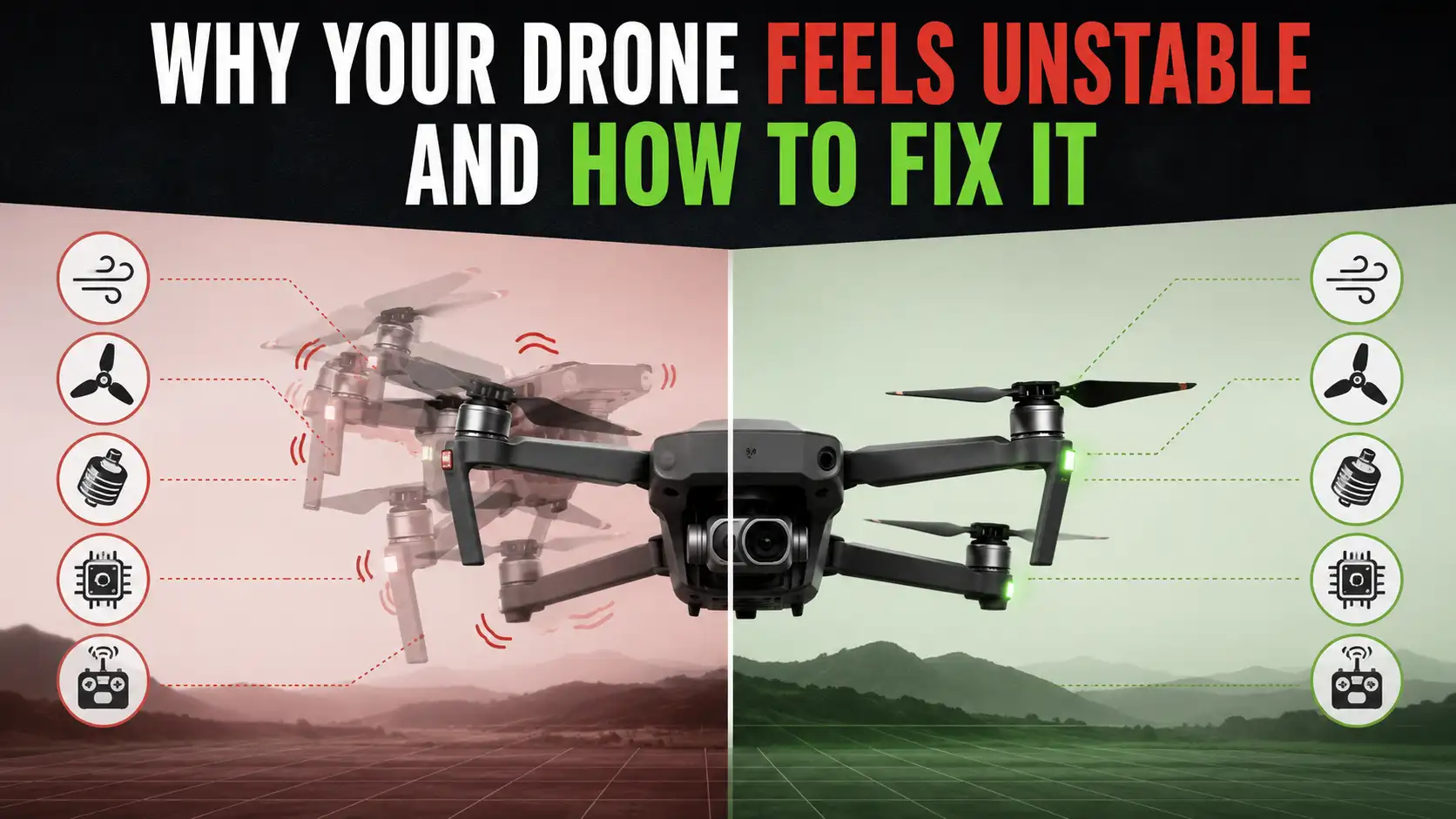
Flying a drone should feel smooth, predictable, and enjoyable. Whether you use your drone for photography, videography, inspections, or simply as a hobby, stability plays a huge role in the overall experience. When everything works properly, a drone can hover almost perfectly in place, respond accurately to control inputs, and capture cinematic footage that looks effortless. However, things become frustrating when the aircraft suddenly feels shaky, drifts to one side, or struggles to maintain a steady position.
Many drone owners immediately assume something is seriously wrong when they encounter unstable flight behavior. Fortunately, that isn’t always the case. In reality, most stability issues come from relatively simple causes such as damaged propellers, poor calibration, weak GPS signals, or environmental factors like wind. Even a small mistake during setup can affect the way a drone behaves in the air.
Think of a drone as a team of components working together. The motors provide lift, the sensors keep the aircraft level, the battery supplies power, and the software coordinates everything. If one member of that team starts performing poorly, the entire system may suffer. Understanding these causes and knowing how to fix them will help you keep your drone flying safely and smoothly.
Understanding Drone Stability
What Makes a Drone Stable?
Drone stability depends on a combination of hardware and software working in harmony. The motors spin at thousands of revolutions per minute, while sensors constantly monitor movement and position. The flight controller processes all of this information in real time and adjusts motor speeds accordingly. This process happens hundreds of times every second, allowing the drone to maintain balance even when outside forces try to push it off course.
Imagine balancing a broom vertically on your hand. Tiny movements are required to keep it upright. A drone does something similar, except it performs these corrections automatically. The gyroscope, accelerometer, GPS module, and compass all contribute to maintaining stable flight. If one of these systems becomes inaccurate, the aircraft may wobble or drift unexpectedly.
Why Stability Matters
Stable flight is important for much more than just convenience. A steady drone provides better control, smoother videos, and safer operation. If the aircraft constantly struggles to maintain position, battery consumption increases because the motors have to work harder to compensate. This means shorter flight times and additional stress on the components.
Stability also improves safety. A drone that reacts predictably is easier to control and less likely to collide with obstacles. For professional users who rely on drones for photography or inspection work, stable flight directly affects the quality of the final results. Even minor vibrations can ruin footage and make expensive equipment feel unreliable.
Common Signs of an Unstable Drone
Wobbling During Flight
One of the most obvious signs of instability is excessive wobbling. Instead of hovering smoothly, the drone rocks from side to side or moves up and down unexpectedly. Sometimes this movement becomes more noticeable when accelerating or changing direction.
Wobbling often indicates issues with propellers, motors, or calibration settings. Although the aircraft may still be flyable, ignoring the problem can eventually lead to more severe damage. Small vibrations tend to worsen over time if the underlying cause isn’t addressed.
Sudden Drifting
A drone should remain relatively stationary when hovering in GPS mode. If it slowly slides sideways without any control input, there is likely a problem with calibration or signal reception.
Drifting may seem harmless at first, but it becomes dangerous when flying near trees, buildings, or water. A drone that cannot maintain position accurately is much harder to control, especially for beginners who rely heavily on automatic stabilization features.
Shaking in Video Footage
Sometimes instability isn’t obvious while flying, but it becomes apparent when reviewing recorded footage. Videos may appear shaky or contain strange vibrations known as “jello effects.”
These problems often originate from tiny mechanical vibrations that travel through the frame and reach the camera. Even though the drone itself may appear stable, the footage reveals imperfections that would otherwise go unnoticed.
Propeller Problems
Propellers are among the most common causes of flight instability.
Damaged Propellers
Propellers might seem simple, but they play a critical role in maintaining balance. Even small chips or bends can disrupt airflow and create uneven lift. This imbalance forces the motors to compensate continuously, resulting in vibrations and unstable flight behavior.
Many pilots underestimate how sensitive propellers are. A minor impact with a branch or rough landing can damage a blade enough to affect performance. Since replacement propellers are relatively inexpensive, it is always better to replace questionable blades rather than risk losing an entire drone.
Incorrect Propeller Installation
Installing propellers incorrectly is another surprisingly common mistake. Most drones use clockwise and counterclockwise propellers, each designed for a specific motor.
Mixing them up can create serious problems. In some cases, the drone may flip over immediately after takeoff. In others, it may lift off but behave unpredictably. Always double-check the markings and installation diagrams provided by the manufacturer before flying.
Calibration Issues
Modern drones depend heavily on sensors to maintain stability.
IMU Calibration Problems
The Inertial Measurement Unit, commonly called the IMU, contains sensors that measure orientation and acceleration. If the IMU becomes inaccurate, the drone may struggle to understand its own position.
Common symptoms include drifting, uneven hovering, and random tilting. Temperature changes, impacts, or firmware updates can sometimes affect calibration. Fortunately, recalibrating the IMU through the drone’s app usually solves these problems quickly.
Performing calibration on a flat and stable surface is important. Even slight movement during the process can introduce errors and reduce accuracy.
Compass Calibration Errors
The compass helps the drone determine direction. Without accurate compass readings, navigation systems become unreliable.
Metal objects, magnets, and electrical interference can confuse the compass. As a result, the drone may display warnings or behave erratically. Calibrating the compass in an open environment away from vehicles and metal structures helps ensure reliable operation.
It is also important to avoid carrying phones or magnetic accessories close to the aircraft during calibration, as they can affect sensor readings.
If you’re looking for a compact drone that’s easy to carry without sacrificing performance, 5 Travel Drones That Are Small but Powerful highlights some of the best portable drones that deliver impressive performance while remaining travel-friendly.
Wind and Environmental Factors
Sometimes the drone itself isn’t the problem.
Flying in Strong Winds
Wind is one of the biggest enemies of stable flight. Even advanced drones with powerful motors have limits. Small and lightweight models are especially vulnerable because they have less mass to resist sudden gusts.
Strong winds force the flight controller to make constant corrections. This leads to increased battery consumption and more aggressive movements. In extreme cases, the drone may struggle to return home because the wind speed exceeds its maximum capability.
Checking weather conditions before flying is one of the simplest ways to avoid unnecessary risks.
Magnetic Interference
Magnetic interference can confuse a drone’s navigation system. Power lines, radio towers, steel structures, and underground cables can all affect compass accuracy.
When interference occurs, the aircraft may drift unexpectedly or display compass warnings. Flying in open areas with minimal electrical interference provides a safer and more stable experience.
Battery and Power Problems
Power consistency is essential for stable flight.
Low Battery Voltage
As the battery drains, voltage naturally decreases. Near the end of a flight, motor performance may become less consistent, causing subtle changes in stability.
Ignoring low battery warnings is risky because sudden voltage drops can trigger emergency landings. Always leave enough reserve power to return safely and avoid pushing batteries to their limits.
Developing the habit of landing with 20–30 percent battery remaining helps preserve battery health and maintain consistent performance.
Battery Health Issues
Batteries age over time. After numerous charge cycles, they gradually lose capacity and become less efficient.
Swollen batteries are particularly dangerous because they can deliver inconsistent power or even fail completely. Heat damage, improper storage, and overcharging accelerate battery degradation. Replacing aging batteries is essential for maintaining stable flight and preventing accidents.
Software and Firmware Issues
Not every stability issue comes from hardware.
Outdated Firmware
Manufacturers regularly release firmware updates to improve performance and fix bugs. Using outdated software can result in sensor errors, GPS problems, and inconsistent behavior.
Updating firmware ensures compatibility between the aircraft, controller, and batteries. However, it is also important to perform calibration procedures after major updates because new software may affect sensor settings.
Keeping firmware current provides access to improvements that manufacturers have developed based on user feedback and testing.
Wrong Flight Settings
Modern drones allow pilots to customize sensitivity and response rates. While experienced users may enjoy aggressive settings, beginners often find them difficult to manage.
High sensitivity causes the drone to react sharply to small stick movements. This can make the aircraft feel unstable even when everything is functioning correctly. Starting with Normal Mode allows new pilots to build confidence before experimenting with advanced settings.
Motor and ESC Problems
Motors are the driving force behind every drone.
Dirty or Damaged Motors
Dust, sand, hair, and debris can interfere with motor operation. Contamination creates friction and reduces efficiency, leading to uneven thrust.
Strange noises, overheating, and excessive vibration are warning signs that should never be ignored. Cleaning motors carefully and inspecting them regularly helps maintain optimal performance.
Even tiny particles trapped inside the motor can affect stability, which is why routine maintenance is so important.
ESC Malfunctions
Electronic Speed Controllers regulate motor speed with incredible precision. If one ESC begins malfunctioning, the drone may shake, spin unexpectedly, or lose stability.
ESC problems are more difficult to diagnose because they often occur intermittently. In many cases, professional repair or replacement is required. Ignoring ESC issues can eventually lead to complete motor failure during flight.
Weight Distribution Problems
Balance matters more than many people realize.
Overloaded Drones
Adding accessories can improve functionality, but every drone has a maximum payload limit. Exceeding that limit places additional stress on motors and batteries.
Heavy accessories increase power consumption and reduce responsiveness. Overloaded drones often feel sluggish and struggle to maintain smooth flight, especially in windy conditions.
Manufacturers design their products with specific weight limits in mind, so staying within those limits helps ensure optimal performance.
Poor Accessory Placement
Even when weight remains within acceptable limits, improper placement can create imbalance.
Imagine carrying a suitcase with all the weight on one side. Walking becomes awkward because your body constantly compensates. Drones experience the same issue. Keeping accessories evenly distributed ensures that the center of gravity remains balanced.
Proper weight distribution reduces strain on motors and improves flight efficiency.
GPS Signal Problems
GPS plays an important role in maintaining position and enabling intelligent flight features.
Weak satellite signals can cause drifting, inaccurate positioning, and delayed responses. Tall buildings, mountains, and dense forests often obstruct satellite reception. Poor weather conditions can also affect signal quality.
Before takeoff, wait for the drone to acquire sufficient satellites. Rushing into the air before GPS lock is established increases the risk of unstable behavior. Patience during preparation often prevents problems later in the flight.
Maintenance Tips for Better Stability
Regular maintenance is one of the easiest ways to prevent stability issues. A few minutes of inspection before and after each flight can significantly improve reliability.
Check propellers for cracks, clean the motors, and inspect the frame for damage. Keep firmware updated and recalibrate sensors whenever necessary. Batteries should be stored at appropriate charge levels and protected from extreme temperatures.
Think of maintenance as routine healthcare for your drone. Small preventative actions today can prevent expensive repairs tomorrow.
Preventing Future Stability Problems
Prevention is always better than troubleshooting after something goes wrong.
Experienced pilots develop habits that minimize risk. They inspect equipment before every flight, monitor weather conditions, and avoid flying in areas with heavy interference. They also keep spare propellers and batteries ready in case problems arise.
Taking off without preparation is like driving a car without checking the tires. Everything might seem fine until a problem suddenly appears. Developing a consistent pre-flight routine greatly improves safety and reliability.
Conclusion
An unstable drone doesn’t necessarily mean the aircraft is defective. In many cases, the cause is something simple such as damaged propellers, calibration errors, battery issues, or environmental conditions. Understanding these factors allows you to diagnose problems quickly and restore smooth flight.
Good maintenance habits, proper calibration, healthy batteries, and smart flying practices are the keys to long-term reliability. A stable drone provides better footage, safer operation, and greater confidence every time you fly. By taking care of your equipment and understanding how the different systems work together, you’ll spend less time troubleshooting and more time enjoying the skies.
FAQs
1. Why does my drone shake while hovering?
Shaking while hovering is usually caused by damaged propellers, dirty motors, sensor calibration problems, or vibrations reaching the camera. Inspecting and maintaining the aircraft regularly can help eliminate these issues.
2. Can strong wind make my drone unstable?
Yes. Strong winds force the flight controller to work harder to maintain position. Small drones are especially vulnerable and may drift or consume battery power much faster than normal.
3. How often should I calibrate my drone?
Calibration is recommended after firmware updates, long-distance travel, or whenever unusual flight behavior occurs. Frequent calibration isn’t always necessary, but performing it when needed helps maintain accuracy.
4. Do old batteries affect drone stability?
Absolutely. Aging batteries provide inconsistent power and reduced capacity. This can lead to shorter flight times, unstable performance, and increased risk of unexpected landings.
5. Is it safe to fly with slightly chipped propellers?
No. Even small chips can disrupt airflow and create vibrations that affect stability. Replacing damaged propellers is inexpensive and far safer than risking a crash.