

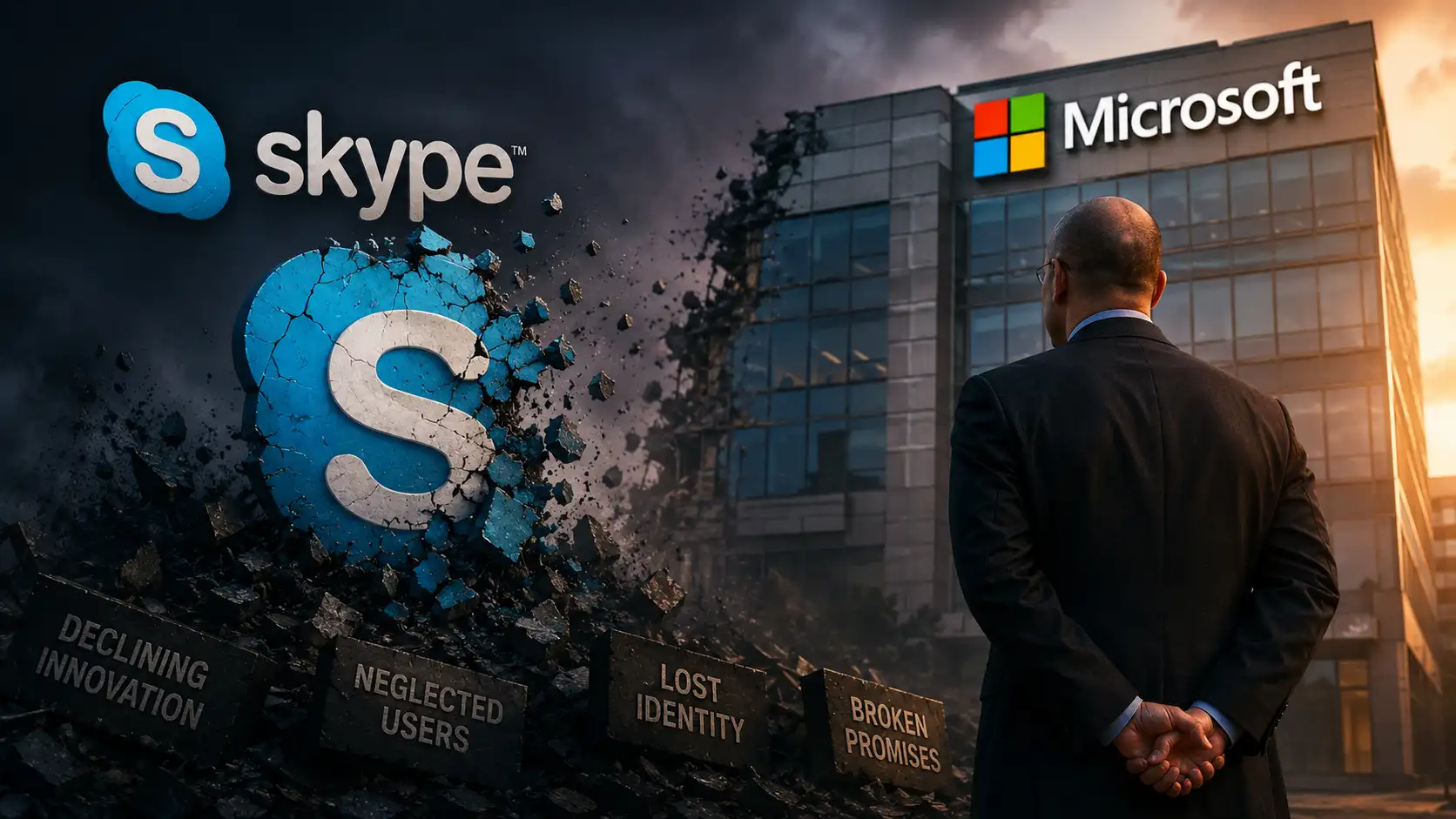
Skype was once one of the biggest success stories in the history of the internet. Before smartphones became powerful enough to handle crystal-clear video calls and before remote work became the norm, Skype changed the way people communicated across the world. It allowed friends, families, students, and businesses to connect through voice and video calls without paying expensive international phone charges. For millions of people, it wasn’t just another app—it was the app that made long-distance communication feel effortless.
The platform grew at an incredible pace during the 2000s. Whether someone wanted to catch up with relatives overseas, attend an online interview, or hold an international business meeting, Skype became the obvious choice. Its name became so recognizable that people started using “Skype” as a verb, much like saying “Google” instead of “search.” That kind of brand recognition is something very few technology companies ever achieve.
What makes Skype’s story so fascinating is that it wasn’t defeated by a single groundbreaking competitor or an unavoidable technological shift. Instead, many analysts and long-time users believe the company slowly lost its direction after being acquired by Microsoft. A combination of strategic decisions, frequent redesigns, changing priorities, and missed opportunities gradually transformed the world’s most recognizable communication platform into a product that struggled to stay relevant. Understanding how that happened offers valuable lessons about innovation, product management, and what can go wrong when a market leader stops focusing on what made it successful in the first place.
The Birth of a Revolutionary Communication Platform
Skype officially launched in 2003 during a period when internet communication was still in its early stages. At that time, international phone calls were expensive, webcams were far from common, and video chatting felt more like science fiction than an everyday activity. Skype introduced a simple idea that immediately caught people’s attention: if both users had an internet connection, they could talk to each other for free.
Its simplicity quickly became one of its greatest strengths. Installing Skype took only a few minutes, creating an account was straightforward, and users could start making voice calls almost immediately. Unlike many communication tools available at the time, Skype didn’t require complicated configuration, making it accessible even to people with limited technical knowledge.
Peer-to-Peer Technology Gave Skype a Huge Advantage
One reason Skype performed so well was its peer-to-peer network architecture. Instead of relying entirely on centralized servers, the software intelligently distributed network traffic among connected users. This innovative approach reduced infrastructure costs while maintaining impressive call quality, even when internet speeds were much slower than today’s standards.
A Brand That Became Part of Everyday Language
As Skype continued to grow, its name became almost synonymous with online calling itself. People didn’t ask whether someone wanted to have a video call—they simply asked if they wanted to “Skype.” Reaching that level of cultural recognition placed Skype alongside internet giants whose brand names became part of everyday conversation.
Skype’s Golden Years
By the late 2000s, Skype had become one of the most popular communication platforms on the planet. It served hundreds of millions of registered users and was widely used for personal conversations, online education, customer support, job interviews, and international business meetings. For many people, Skype represented the future of communication.
Businesses also embraced the platform because it dramatically reduced travel and communication costs. Small companies could easily connect with clients around the world, while families no longer had to rely on expensive international phone services just to stay in touch. Skype wasn’t simply convenient—it fundamentally changed how people interacted across long distances.
Crystal-Clear Voice Calls
Voice quality became one of Skype’s biggest selling points. Compared to many internet calling services available during the mid-2000s, Skype consistently delivered clearer audio with fewer dropped calls, making conversations feel far more natural.
Video Calling Changed Everything
Perhaps Skype’s most iconic feature was its video calling capability. Seeing loved ones, friends, or colleagues in real time through an internet connection felt revolutionary. For many families separated by countries or even continents, Skype made distance feel much smaller.
Instant Messaging and File Sharing
Skype wasn’t limited to voice and video communication. It also offered instant messaging, group chats, and convenient file sharing, allowing users to exchange documents, photos, and presentations without switching to another application. This all-in-one approach made it especially attractive for both personal and professional use.
Microsoft’s Record-Breaking Acquisition
In 2011, Microsoft announced that it would acquire Skype for approximately $8.5 billion, making it the largest acquisition in the company’s history at that time. The news generated enormous excitement throughout the technology industry. Many believed Microsoft had just secured the future of digital communication by purchasing one of the internet’s most recognizable platforms.
The acquisition also seemed like a perfect strategic fit. Microsoft already owned Windows, Office, Outlook, Xbox, and numerous enterprise services. Integrating Skype across this ecosystem appeared to be an obvious way to strengthen all of its products while giving Skype access to Microsoft’s vast engineering resources and financial backing.
Replacing Windows Live Messenger
One of Microsoft’s first major decisions was to retire Windows Live Messenger and encourage its millions of users to migrate to Skype. From a business perspective, consolidating two communication platforms into one made sense. It eliminated overlap and concentrated Microsoft’s efforts on a single messaging service.
However, the transition wasn’t as smooth as many expected. Windows Live Messenger users had grown accustomed to a lightweight, fast, and familiar experience. After switching to Skype, many found the software more resource-intensive and less intuitive. While Skype gained new users overnight, it also inherited a community that wasn’t entirely happy with the change.
The First Signs That Something Was Changing
During the first few years after Microsoft’s acquisition, Skype remained popular, but subtle warning signs began to appear. Updates arrived more frequently, bringing redesigned interfaces, reorganized menus, and new visual elements. While change is a natural part of software development, many users questioned whether these updates actually improved the experience.
Long-time users often found themselves searching for features that had been moved or renamed. Simple tasks suddenly required more clicks than before, creating frustration instead of convenience. Rather than refining an already successful product, Microsoft appeared determined to keep redesigning it, even when users hadn’t asked for major changes.
Performance Slowly Became a Problem
Earlier versions of Skype were known for launching quickly and running efficiently on modest hardware. As the software evolved, however, it gradually became heavier. Startup times increased, memory consumption grew, and some users began reporting slower performance during calls.
While modern computers became significantly more powerful over the same period, Skype somehow felt less responsive than it had years earlier. It was an early indication that the platform was beginning to lose one of the qualities that had originally made it so appealing.
Too Many Redesigns, Too Little Improvement
Software naturally evolves over time, but Skype seemed to change its appearance more often than its functionality. Menus were reorganized, buttons moved to new locations, and familiar layouts disappeared in favor of modern-looking interfaces. While Microsoft likely intended to keep the application fresh, many loyal users felt the constant redesigns made Skype more confusing rather than more user-friendly.
The biggest criticism wasn’t that Skype looked different—it was that the redesigns rarely addressed the issues people actually cared about. Users wanted faster performance, better reliability, and smoother calls, but many updates focused on visual changes instead of fixing long-standing problems.
Trying to Follow Every Trend
As messaging apps and social platforms exploded in popularity, Skype began adding features that looked inspired by its competitors. Emojis became more prominent, reactions were expanded, and even Snapchat-style Highlights were introduced. Although these additions weren’t inherently bad, they didn’t solve the core issues that frustrated users.
Many people simply wanted Skype to remain the best communication tool available. Instead, it started feeling like an application trying to imitate trends rather than leading the industry as it once had.
Competition Was Catching Up
While Skype was busy reinventing itself, new competitors entered the market with a much clearer focus. Rather than trying to do everything, these platforms excelled at doing one thing exceptionally well.
WhatsApp made messaging and calling effortless on smartphones. Discord built thriving communities for gamers and online groups. Slack transformed workplace collaboration with organized channels and integrations. Meanwhile, Zoom concentrated almost entirely on making video meetings simple and reliable.
The Rise of Mobile-First Communication
One area where Skype struggled was adapting to the smartphone era. Although it eventually offered mobile apps, the experience often felt slower and less polished than competing services designed specifically for mobile devices.
Consumers increasingly preferred apps that opened instantly, synchronized seamlessly across devices, and required minimal setup. Skype, once known for its simplicity, gradually became one of the more complicated options.
If you’re concerned about your online presence, read Google Your Name! Here’s What You Should Look For to learn how to check and improve your digital reputation.
The Pandemic Exposed Skype’s Weaknesses
When the COVID-19 pandemic forced millions of people to work and study from home, demand for video conferencing skyrocketed. This should have been Skype’s moment to reclaim its position as the world’s leading communication platform.
Instead, another company stole the spotlight.
Zoom experienced explosive growth because joining a meeting required almost no effort. Participants could simply click a meeting link without creating complicated accounts or navigating confusing settings. Google Meet also expanded rapidly thanks to its integration with Google Workspace, while Microsoft began promoting another product instead of Skype.
Microsoft Chose Teams Over Skype
Rather than investing heavily in Skype during one of the biggest opportunities in its history, Microsoft shifted its attention toward Microsoft Teams.
Initially designed for workplace collaboration, Teams quickly became Microsoft’s flagship communication platform. New features, development resources, and marketing efforts increasingly focused on Teams, while Skype received comparatively fewer significant improvements.
For many users, this signaled that Microsoft no longer viewed Skype as its future. Instead of competing aggressively with Zoom and Google Meet using Skype’s globally recognized brand, Microsoft effectively asked customers to adopt a completely different product.
Why Teams Succeeded Where Skype Struggled
Microsoft Teams wasn’t necessarily a bad product. In fact, it offered excellent collaboration tools for businesses, including document sharing, team channels, calendar integration, and deep connections with Microsoft 365.
The problem was that Teams served a different audience. Skype had built its reputation as a simple communication tool for everyone—from grandparents calling family members to students working on group projects. Teams, on the other hand, targeted organizations and workplaces, leaving many casual users without a clear reason to remain in Microsoft’s communication ecosystem.
Could Skype Have Been Saved?
Many technology experts believe Skype’s decline wasn’t inevitable. The platform already had one of the strongest brands in online communication, hundreds of millions of users, and years of technical experience.
Instead of repeatedly redesigning the interface and chasing social media trends, Microsoft could have focused on improving speed, stability, mobile performance, and call quality. Simplifying the user experience while embracing the smartphone era more aggressively might have helped Skype maintain its leadership position.
Another missed opportunity was the pandemic. With remote work becoming essential worldwide, Skype already had years of experience in video communication. Better execution during that period could have completely changed its story.
Skype’s Lasting Legacy
Even though Skype eventually lost much of its popularity, its impact on technology remains undeniable. It introduced millions of people to internet calling long before video communication became an everyday activity.
Many features people now take for granted—high-quality video calls, online meetings, screen sharing, and internet-based voice communication—became mainstream because Skype helped prove they were practical and valuable. In many ways, today’s communication apps are standing on the foundation Skype built more than two decades ago.
Its story also serves as a reminder that having the best product today doesn’t guarantee success tomorrow. Technology moves quickly, and companies must continue listening to users instead of assuming market leadership will last forever.
Conclusion
Skype’s rise was nothing short of extraordinary. It transformed online communication, connected millions of people around the globe, and became one of the internet’s most recognizable brands. Few software products have ever achieved the same level of cultural impact, with their name becoming part of everyday language.
However, its decline demonstrates that even industry leaders can lose their advantage through a series of strategic mistakes rather than one catastrophic failure. Frequent redesigns, slower performance, increasing competition, shifting priorities, and Microsoft’s growing focus on Teams gradually pushed Skype into the background. While its influence on modern communication will never be forgotten, Skype also stands as one of the clearest examples of how a market leader can slowly lose its way—not because innovation stopped around it, but because it stopped building on the strengths that made it successful in the first place.
Frequently Asked Questions
1. Why did Skype become so popular in the first place?
Skype became popular because it allowed users to make free voice and video calls over the internet at a time when international phone calls were expensive. Its ease of use, reliable call quality, and cross-platform availability helped it gain millions of users worldwide.
2. When did Microsoft acquire Skype?
Microsoft acquired Skype in 2011 for approximately $8.5 billion, making it the company’s largest acquisition at the time.
3. Why do many people believe Microsoft hurt Skype?
Many critics argue that Microsoft introduced too many interface redesigns, allowed performance issues to grow, shifted development resources toward Microsoft Teams, and failed to adapt Skype effectively to changing market demands.
4. Why did Zoom become more popular than Skype?
Zoom focused on making video meetings incredibly simple to join and highly reliable. During the COVID-19 pandemic, this ease of use helped Zoom attract millions of new users while Skype struggled to regain momentum.
5. Is Skype still available today?
Skype remained available for years after its decline, but Microsoft gradually shifted its primary communication strategy toward Teams. As a result, Skype no longer holds the dominant position it once enjoyed in online communication.